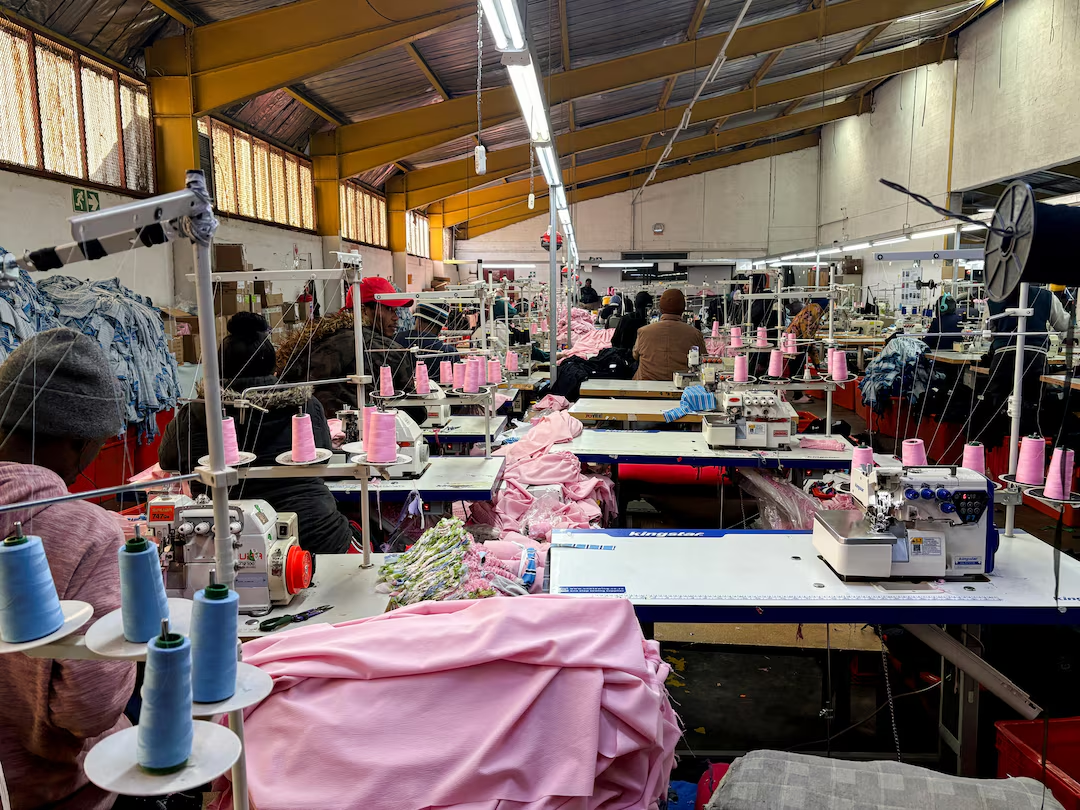
Manufacturers across South Africa are facing mounting staffing challenges as thousands of migrant workers leave the country.
Business owners say the loss of experienced employees is beginning to affect production, particularly in industries that have traditionally depended on foreign labour.
The impact is especially evident in the clothing and textile sector, where factory operators say replacing skilled workers has become increasingly difficult. Many employers report that recruitment efforts have failed to produce enough qualified local applicants.
“There is no one.”
Industrial businesses in Durban said many experienced employees from Zimbabwe, Malawi and Mozambique have returned to their home countries. Factory managers say the departures have slowed operations and created gaps that are not easily filled.
The labour shortage is also affecting agriculture, construction and domestic services. The situation followed the exit of large numbers of undocumented migrants after anti-immigration campaigns intensified. Regional figures indicate that more than 160,000 people have left South Africa in recent months.
Employers maintain that migrant workers have long supported sectors where labour is difficult to source. They argue that the sudden reduction in the workforce has increased production costs and disrupted normal business activities.
Others, however, believe the current situation should encourage businesses to employ and train more South Africans. They contend that with unemployment remaining high, companies should reduce their dependence on foreign labour.
The government continues to promote policies that prioritise local employment while recognising that some industries still rely on migrant workers. Industry groups have meanwhile proposed regulated cross-border labour programmes to help businesses meet seasonal and specialised workforce needs without encouraging illegal migration.