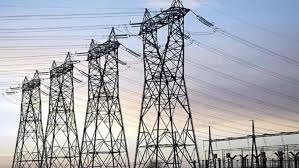
The Federal Government is pursuing a fresh $500 million loan from the World Bank as part of efforts to secure more funding for infrastructure projects across Nigeria, particularly in electricity, transportation and water supply.
The proposed facility is expected to help attract private investment into major projects that have struggled to secure adequate financing.
According to a World Bank project document updated on November 4, 2026, the loan would support a wider $3.85 billion infrastructure financing initiative.
The programme, called the Nigeria Infrastructure Financing and De-Risking Platform for Growth and Jobs (INFRAGROW), is intended to make infrastructure investments more attractive to commercial lenders and other investors.
The Federal Ministry of Finance is listed as the borrower, while the Nigeria Sovereign Investment Authority (NSIA) will be responsible for implementing the programme.
The World Bank has scheduled a technical design review for January 21, 2027, ahead of a tentative approval date of May 25.
The proposed approval date comes just four days before the scheduled presidential inauguration on May 29, 2027.
However, the loan has not been approved, and the timetable remains subject to change. Approval would also not mean that the entire amount would be released immediately.
The financing proposal comes amid Nigeria’s continuing struggle to close its infrastructure funding gap, estimated in the project document at approximately $100 billion annually.
The government hopes the arrangement will encourage more private investors to participate in projects that require substantial capital and long repayment periods.
Under the proposed financing structure, $400 million would be provided through the International Bank for Reconstruction and Development.
Another $100 million would come from the International Development Association, bringing the requested World Bank financing to $500 million.
The wider programme also provides for proposed equity investments of $200 million each from the NSIA and private investors.
Commercial lenders are expected to contribute another $600 million, while additional financing would be mobilised through guarantees and other investment arrangements.
The initiative is structured around four facilities designed to address different problems associated with infrastructure financing.
One will support project preparation, including feasibility studies and technical assessments required before construction or investment decisions.
Another will provide financial assistance for economically important projects that may struggle to attract investors because of limited commercial returns.
The remaining facilities will offer long-term investment funding and guarantees intended to reduce financial and political risks.
The World Bank has also identified environmental and social risks associated with potential projects, including land acquisition, displacement of communities and possible environmental damage.
The programme is expected to improve how infrastructure partnerships are developed, financed and supervised.
For now, the proposed loan remains at the planning stage, with its eventual contribution to Nigeria’s infrastructure development dependent on World Bank approval, the mobilisation of additional investment and the successful execution of supported projects.