The Federal Government is working to ease the financial pressure on Nigeria’s electricity industry through a ₦3.3 trillion debt settlement programme aimed at helping power companies recover outstanding payments.
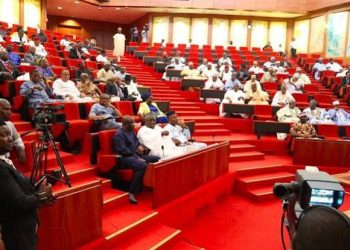
The Minister of Power, Joseph Tegbe, provided details of the intervention at the sixth annual conference of the Power Correspondents Association of Nigeria in Abuja.
Tegbe, who was represented by his Special Adviser on Administration and Project, Martins Olajide, disclosed that ₦1.23 trillion had been raised towards settling the obligations.
The debts have remained a major concern for electricity generation companies, many of which depend on regular payments to meet operational expenses and settle bills owed to gas suppliers.
According to the minister, resolving these financial difficulties is an important part of the government’s efforts to improve the performance of the power sector.
He explained that the administration was also investing in infrastructure and expanding electricity access to communities that remain underserved.
One of the initiatives highlighted was the Presidential Metering Initiative, which he said had provided meters to more than 2.8 million electricity customers.
The programme is expected to improve billing practices, reduce disputes over electricity charges and help distribution companies collect revenue more effectively.
Tegbe also drew attention to solar power projects being implemented by the Rural Electrification Agency.
He said the agency’s interventions had reached rural communities and public institutions, including universities and hospitals.
On the national grid, the minister announced that construction had started on a new control centre in Osogbo to replace the existing ageing facility.
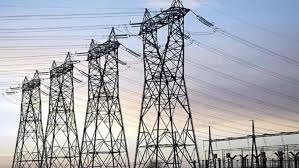
He also reported improvements in transmission infrastructure, saying more than 15,000 megavolt-amperes of capacity had been added between 2023 and October 2026.
The minister identified Apapa, Ijora, Ikeja, Kumbotoso and Mashi among locations where substation developments had contributed to the expansion.
These projects, he explained, were designed to strengthen the movement of electricity through the transmission network and improve supply to distribution companies.
Another issue raised during the conference was the persistent vandalism of electricity installations.
Tegbe said President Bola Tinubu had approved measures involving security agencies and stronger legal action to protect critical power facilities.
He identified grid stability, financial sustainability, better utilisation of existing infrastructure and further expansion as major priorities.
The government is also targeting improvements along the Lagos-Ogun, Benin-Enugu-Port Harcourt and Abuja-Kaduna-Kano economic corridors.
Speaking on the industry’s challenges, the association’s chairman, Obas Esiedesa, expressed concern about declining electricity generation.
He pointed to inadequate gas supplies and falling water levels at hydroelectric stations as problems affecting electricity production.
Esiedesa urged regulators, generation companies and gas suppliers to work more closely to address the recurring difficulties.
The conference brought renewed attention to the need for debt repayments and infrastructure improvements to produce measurable gains in electricity supply.