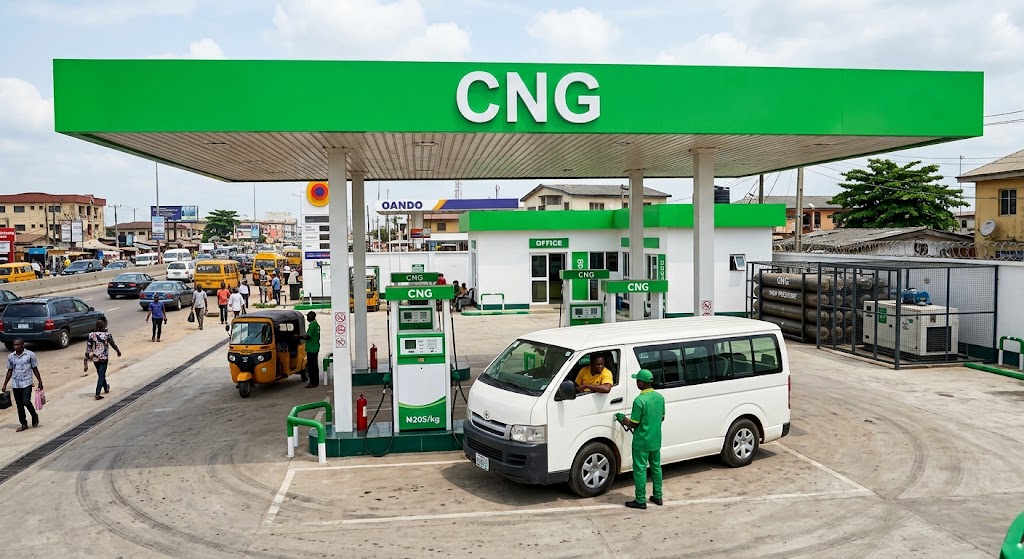
The Federal Government is expanding its Compressed Natural Gas (CNG) programme with plans for 500 additional refuelling stations, as President Bola Tinubu and state governors move to push down transportation costs.
The new stations will bring the number planned under the programme to 1,000 nationwide, building on 500 stations previously ordered through the Midstream and Downstream Gas Infrastructure Fund.
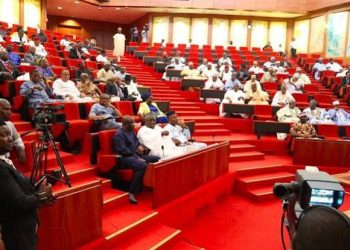
Tinubu announced the expansion after his meeting with governors in Abuja on Thursday, saying the states had agreed to take immediate steps to reduce transportation costs by taking advantage of CNG and electric vehicles.
The President said the Federal Government was already supporting the transition through the Presidential CNG Initiative, with more than 120,000 vehicles converted to CNG nationwide and over 100,000 additional conversion kits in the works.
He added that the government was continuing to expand vehicle conversion centres and CNG refuelling infrastructure to make the alternative fuel more accessible.
The Midstream and Downstream Gas Infrastructure Fund is also financing more than 100 gas projects across the country. These include 15 CNG mother stations and 86 daughter stations, according to details released by the President.
The government had already commissioned four projects supported by the fund in Lagos, Abuja and Owerri in May. Among them was a 15-station refuelling network in Lagos, while a facility in Abuja was designed to serve up to 1,000 cars and tricycles and 50 trucks and buses daily.
Tinubu said the expansion was intended to help Nigerians benefit from the lower running costs associated with CNG-powered vehicles, particularly in public transportation.
“A vehicle running on CNG spends 60 to 80 per cent less on fuel than one running on petrol.”
He also said the Federal and state governments had agreed to establish a joint committee to begin implementing measures aimed at reducing transportation costs.
According to Tinubu, intra-state transportation is an area where state governments have significant influence over fares. He therefore welcomed the governors’ decision to pursue measures that would pass the benefits of cheaper energy to commuters.
The President said the government’s target was for Nigerians to start benefiting from lower transport fares from October 1, 2026.
The latest CNG expansion comes as the Federal Government continues to use alternative energy sources as part of its response to the economic impact of petrol subsidy reform. The administration has positioned CNG as a lower-cost fuel option for motorists and transport operators.