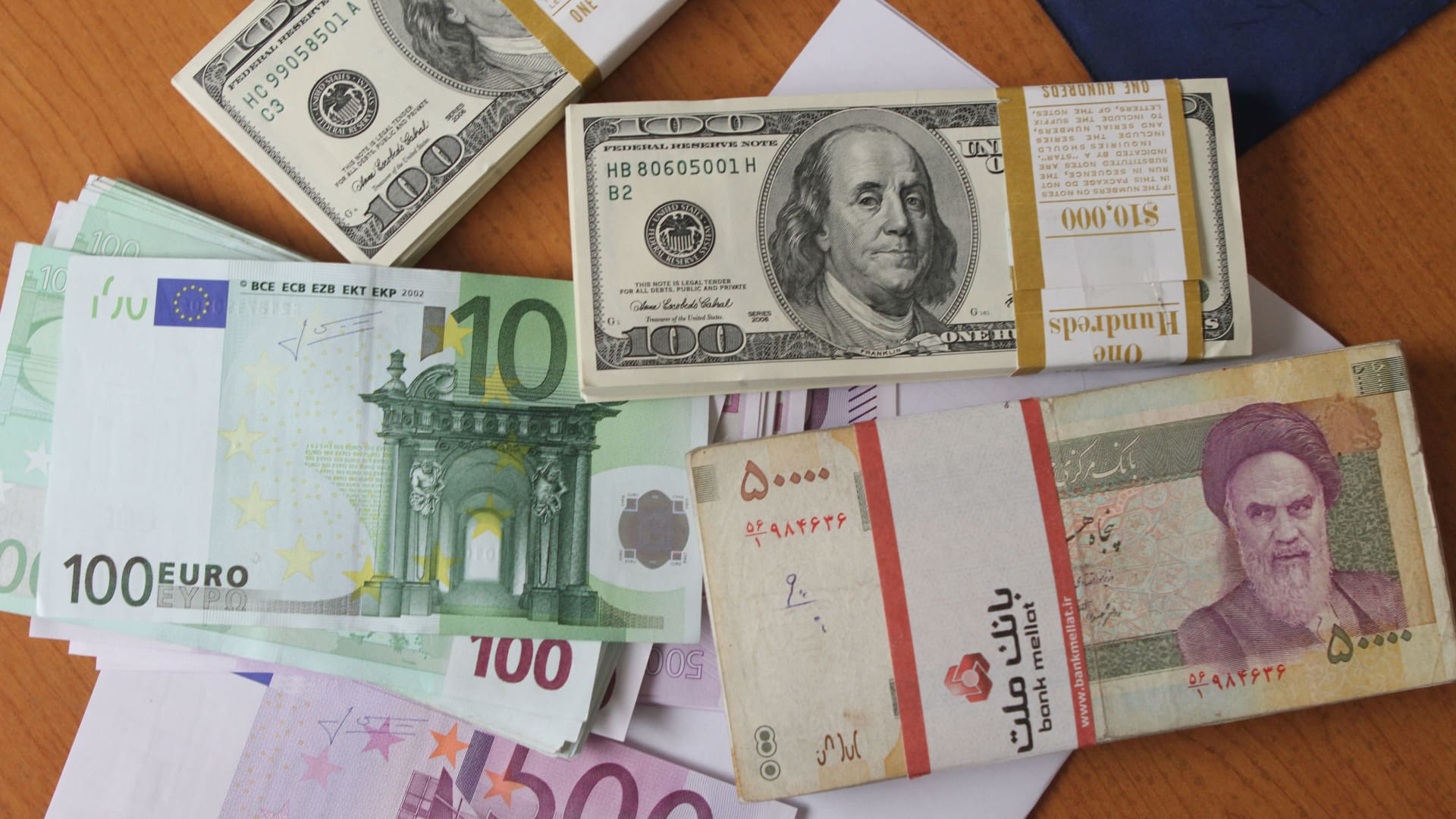
TEHRAN — Iran’s rial has plunged to an unprecedented level against the US dollar, reaching about 2.02 million rials per dollar, as Washington prepares another round of sanctions aimed at intensifying pressure on Tehran. The sharp fall came on Monday amid continuing economic and geopolitical tensions.
The currency’s latest slide adds to the financial strain facing Iran, where the rial has repeatedly weakened amid prolonged sanctions, high inflation and the economic effects of the conflict with the United States and Israel. The market exchange rate is significantly weaker than the official rate used by Iran’s central bank.
Washington is preparing to expand its economic campaign against Tehran, with US Treasury Secretary Scott Bessent expected to announce additional measures. The planned action includes broader secondary sanctions that could affect countries, companies and other entities continuing to conduct business with Iran.
Bessent has portrayed the campaign as an exceptionally severe financial operation against Tehran.
“At dawn begins an economic D-Day — the single greatest financial offensive ever marshaled against an adversary.”
The worsening currency situation is already affecting Iranian consumers. The Associated Press reported that prices of essential goods have risen sharply, with the depreciation of the rial adding to the pressure on household finances. The International Monetary Fund has also projected that Iran’s economy will contract by more than 5%.
The US measures are expected to put additional pressure on Iran’s oil revenues and international trade while increasing scrutiny of foreign businesses that maintain commercial links with Tehran.
China is among the countries being closely watched because of its economic relationship with Iran, particularly its purchases of Iranian crude. Any attempt to widen sanctions to Chinese businesses or financial institutions could create additional friction between Washington and Beijing.
The confrontation also carries implications for global energy markets because Iran sits alongside the Strait of Hormuz, a crucial route for international oil shipments. Continued disruption in the region could therefore extend the economic consequences beyond Iran itself.