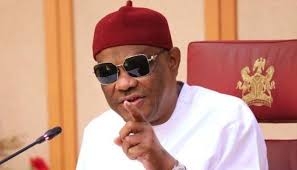
Federal Capital Territory Minister Nyesom Wike says Peter Obi’s victories in Edo and Cross River during the 2023 presidential election were partly the result of a strategy adopted by the five aggrieved Peoples Democratic Party governors known as the G-5. Wike said the governors wanted to prevent the PDP’s strong presence in the South-South from giving the party’s presidential candidate, Atiku Abubakar, an advantage.
Wike made the disclosure on Monday, September 21, 2026, while appearing on TVC’s Journalists’ Hangout. He said the group considered the PDP’s strength in the region a potential advantage for Atiku and therefore decided that some of those votes should instead go to the Labour Party candidate.
According to Wike, Edo was one of the states where the arrangement was applied. He said the same decision was taken in Cross River, where Obi eventually emerged ahead of Atiku in the presidential election.
“Our problem will be Atiku. Therefore, instead of Atiku to take it, let it go to the Labour Party. That was our strategy. Cross River, the same thing. That’s what we did.”
The 2023 results show that Obi won both states. In Edo, he received 331,163 votes, ahead of Bola Tinubu of the All Progressives Congress with 144,471 and Atiku with 89,585. In Cross River, Obi polled 179,917 votes, while Tinubu recorded 130,520 and Atiku 95,425. The results establish the outcome of the election but, by themselves, do not establish that the G-5 strategy caused those results.
Rivers, however, was treated differently, Wike said. He explained that the governors were concerned about the political implications of an Obi victory in the state and therefore decided not to allow the Labour Party candidate to take it.
“It was only Rivers that said, ‘No, we have a problem here in Rivers. Obi will not win here because if he wins, he sends a signal somewhere, people may not understand it.’ And we stopped…we stopped it.”
The G-5 emerged from a dispute within the PDP ahead of the 2023 election. Its members were Wike, Seyi Makinde of Oyo State, Samuel Ortom of Benue, Okezie Ikpeazu of Abia and Ifeanyi Ugwuanyi of Enugu. The governors opposed Atiku’s presidential candidacy and demanded changes within the party, including action on the question of regional power rotation and the position of the party’s national chairman.
Wike’s latest comments are consistent with his position during the 2023 campaign that the group was working toward the emergence of a southern president. He had also rejected the suggestion at the time that he was openly backing a particular presidential candidate, while explaining the political reasoning behind the G-5’s position.
The minister also used his latest appearance to argue that the political circumstances surrounding the 2023 election had changed. He questioned whether Obi could reproduce his previous performance in states including Cross River, Akwa Ibom and Delta in the 2027 election.
Wike went further by telling Obi to look beyond the 2027 presidential contest and prepare for 2031. His comments on Obi’s prospects were his own political assessment and should therefore be distinguished from the officially recorded results of the 2023 election.