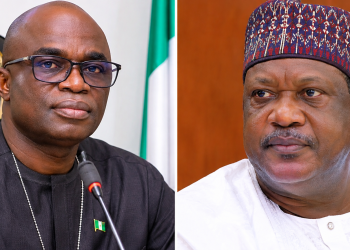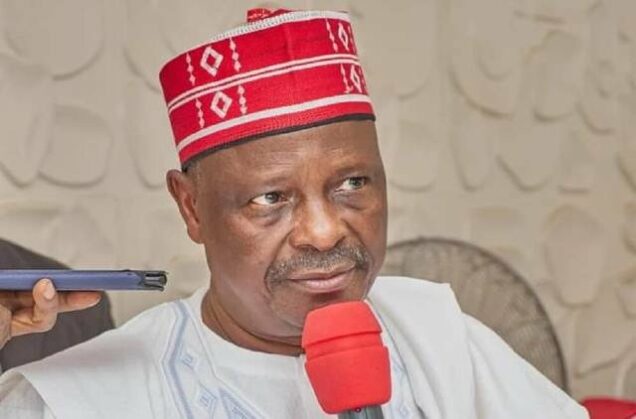
Rabiu Musa Kwankwaso has called for a review of Nigeria’s presidential election requirements, arguing that no candidate should be declared the winner without receiving at least half of the votes cast.
The former Kano State governor made the proposal at the fifth convocation ceremony of Skyline University Nigeria in Kano on Saturday, November 14, 2026.
Kwankwaso, the vice-presidential candidate of the Nigeria Democratic Congress (NDC), used the outcome of the 2023 presidential election to explain why he believes a constitutional amendment is necessary.
He noted that President Bola Tinubu won the election with about 8.7 million votes, although approximately 24 million votes were cast and the country had around 93 million registered voters.
Under the existing constitutional provisions, a presidential candidate does not necessarily need an outright majority to win. In an election involving more than two candidates, victory depends on securing the highest number of votes and meeting the geographical spread requirement.
Kwankwaso argued that introducing a minimum vote threshold would require presidential winners to attract wider electoral support.
His remarks also touched on the political environment ahead of the 2027 general elections. He accused some governors of encouraging practices that made it difficult for opposition parties to operate freely, citing Benue, Cross River and Lagos states.
In Kano, the former governor expressed dissatisfaction with the Independent National Electoral Commission (INEC) over the exclusion of Aminu Abdussalam, the NDC governorship candidate, from its October 10 publication.
Kwankwaso said Abdussalam had fulfilled the necessary conditions and appeared on an earlier list issued by the commission.
He explained that INEC cited a pending court case when the party sought clarification. He also questioned the circumstances surrounding a court order reportedly obtained on October 29.
The NDC, he said, had subsequently approached the Chief Judge of the Federal High Court to seek the transfer of the matter.
Kwankwaso appealed to politicians, electoral officials and judicial authorities to act fairly and ensure that political competition did not degenerate into violence.
Discussing his relationship with the NDC presidential candidate, Peter Obi, the former governor praised Obi’s integrity and identified education as one of their shared priorities.
He maintained that access to education should not depend on a family’s ability to pay school fees, stressing their common commitment to expanding educational opportunities for children.
With preparations for the 2027 elections underway, Kwankwaso remained confident about his party’s electoral prospects, despite the difficulties he said opposition parties were facing.