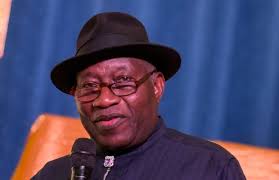
Former President Goodluck Jonathan has raised concerns over Nigeria’s approach to choosing political leaders, saying a country that places ethnicity and religion above competence needs to reconsider how it practises democracy.
Jonathan made the remarks on Saturday, November 14, 2026, at an event marking the 162nd birth anniversary of Herbert Macaulay, one of Nigeria’s foremost nationalists.
The former president chaired the colloquium, which took place at the Nigerian Institute of International Affairs in Lagos.
He expressed reservations about a political system in which a person’s ethnic background, religious beliefs and language can count more than the qualities needed to govern effectively.
Jonathan argued that rebuilding Nigeria’s democracy would require more than changing how leaders emerge. He stressed the importance of public accountability, independent institutions, judicial independence, respect for human rights and greater involvement of citizens in government affairs.
Much of his address centred on the gap between the country Nigeria’s founding nationalists hoped to build and the realities Nigerians face today.
According to him, the struggle for independence was also a struggle for economic freedom, social justice, national unity and access to quality education and healthcare.
While recognising the gains made since independence, Jonathan lamented that corruption, insecurity, poor infrastructure and inconsistent policies had continued to slow the country’s development.
He drew attention to the progress of India, Singapore and South Korea, particularly in manufacturing, healthcare, education and technology. Their achievements, he suggested, offered lessons for Nigeria, given its considerable human and natural resources.
Education also featured in his address. Jonathan called on Nigerian universities to devote greater attention to research and innovation, with emphasis on finding practical solutions to the country’s problems.
Looking ahead to the 100th anniversary of Nigeria’s independence, the former president posed a question about the country’s future.
“What kind of country will we be celebrating in 2060?” he asked.
He urged political leaders and institutions to begin preparing for that milestone through a national development plan backed by specific objectives, measurable targets and clearly assigned responsibilities.
The occasion also provided an opportunity for Bode George, Chairman of the Herbert Macaulay Colloquium Family Committee, to renew attention to the nationalist’s legacy.
George appealed to President Bola Tinubu to return the site of Macaulay’s former home on Marina, Lagos, to his family for the establishment of a permanent memorial hall.
He also asked politicians to learn from Macaulay’s commitment to public service instead of using political office to further personal interests.
Jonathan, on his part, encouraged younger Nigerians to carry forward the work of the country’s founding nationalists by embracing innovation, entrepreneurship, responsible citizenship and active participation in governance.