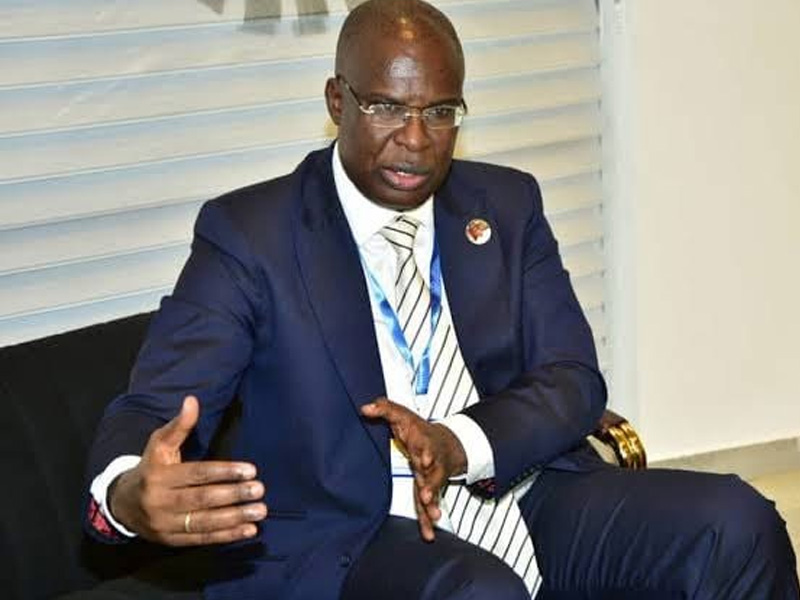
Timipre Sylva has resigned from the All Progressives Congress, saying the party has drifted from the principles on which it was founded and that he could no longer remain a member under its current direction.
The former Bayelsa State governor announced the decision on Monday, August 31, 2026, in a resignation letter sent to the APC chairman in Ward 4, Brass Local Government Area of the state. Sylva said he reached the decision after consulting members of his family, associates, colleagues and supporters.
Sylva, who served as Minister of State for Petroleum Resources, described himself as one of the founding members of the APC and recalled his contribution to the party’s development. He said, however, that the organisation had moved away from the ideals that originally brought its members together.
“I wish to formally tender my resignation from the All Progressives Congress (APC), with immediate effect.”
He further criticised what he described as the party’s present political conduct, arguing that its leadership had embraced an approach in which almost anything could be justified in the pursuit of political objectives.
The resignation comes against the backdrop of separate legal and security controversies involving the former governor. The Economic and Financial Crimes Commission declared Sylva wanted in November 2025 in connection with allegations involving conspiracy and dishonest conversion of $14,859,257. The allegations have not been established as a criminal conviction.
Sylva has also been linked by prosecutors to an alleged plan to overthrow President Bola Tinubu’s government. The Federal Government filed a 13-count charge in April 2026 against six defendants at the Federal High Court in Abuja, with Sylva named in counts connected with the alleged conspiracy. Sylva has denied the allegations.
The allegations have produced further court proceedings. In July, the Department of State Services brought five people before the court over claims that they concealed information about Sylva’s whereabouts. They pleaded not guilty and were granted bail under conditions imposed by the court.
Sylva’s resignation letter, however, did not cite the coup allegations as the reason for leaving the APC. Instead, he centred his decision on what he described as the party’s abandonment of its founding values and his disagreement with the direction of the APC-led administration.
He also predicted that Nigerians would use the 2027 elections to demand political change. At the same time, he acknowledged that leaving the ruling party could bring additional pressure on him and those around him.
Sylva’s exit therefore separates him from the APC at a politically significant point, with preparations for the 2027 elections already taking shape. For a politician who helped establish the party, his decision represents a notable change in his political alignment in Bayelsa State.