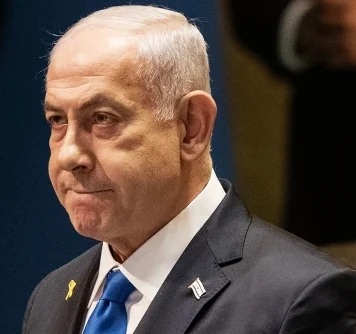
Israel is facing renewed political uncertainty after its October 27 general election failed to produce a clear parliamentary majority, leaving Prime Minister Benjamin Netanyahu’s future in power hanging in the balance.
The election results show Netanyahu’s right-wing and ultra-Orthodox alliance securing 53 seats in the 120-member Knesset, while the opposition bloc led by former military chief Gadi Eisenkot won 48 seats. The remaining 19 seats went to two Arab-led parties, the Joint List and Ra’am, placing them in a potentially decisive position in negotiations over the next government.
With 61 seats required to form a majority government, neither of the two main political blocs has enough support to govern independently. Opposition leaders have begun discussions aimed at establishing an alternative government, but disagreements over cooperation with Arab political parties and ultra-Orthodox factions have complicated efforts to reach an agreement.
Netanyahu’s Likud party, which individually secured 27 seats, remains the largest party in parliament. The prime minister has argued that this gives him a mandate to continue leading Israel, despite his alliance falling short of a majority.
His allies have also raised allegations of voting irregularities involving Arab parties. Police have dismissed claims of systematic violations, while a separate investigation by Israel’s Shin Bet security agency remains ongoing.
The political uncertainty places President Isaac Herzog in a central role. Once election results are certified, Herzog is expected to consult parliamentary parties before selecting a lawmaker to attempt to form a government.
The chosen candidate will initially have 28 days to establish a coalition, with a possible 14-day extension. Failure to reach an agreement could lead to further negotiations or another national election.
The stalemate comes amid continued regional tensions involving Iran and questions about Israel’s relationship with the United States. Political observers say developments in the region could complicate coalition negotiations.
Netanyahu, who remains caretaker prime minister, also faces an ongoing corruption trial, adding another dimension to the political uncertainty.
Israel’s newly elected Knesset is scheduled to convene on November 10, although there is no guarantee that a new government will be formed by then.
For now, Netanyahu remains in office, but his ability to secure another term depends on negotiations with parties outside his existing coalition or the failure of his opponents to form an alternative government.