BUNIA, DR CONGO
Health authorities in the Democratic Republic of the Congo have launched a major clinical trial to test potential vaccines against the deadly Bundibugyo Ebola virus, offering renewed hope as the country battles an outbreak that has claimed more than 4,600 lives. The trial, named Tumaini, meaning “hope” in Swahili, began on Friday, October 23, 2026, when the first participant received a vaccine in Bunia, the capital of northeastern Ituri Province.
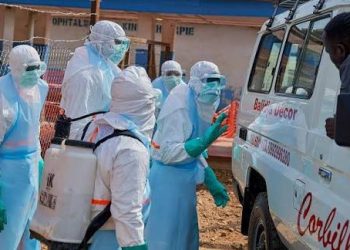
The World Health Organization (WHO) described the development as a significant milestone in efforts to contain the epidemic, which was officially declared on May 15. According to WHO figures released on October 23, the DRC had recorded 9,704 confirmed infections and 4,687 deaths as of October 20, representing a fatality rate of approximately 48 percent. The outbreak has spread across 66 health zones in eight provinces, placing enormous pressure on healthcare facilities and emergency response teams. The new Phase 2/3 clinical trial will evaluate the safety, immune responses and effectiveness of several vaccine candidates against the Bundibugyo virus.
Researchers have begun with Ervebo, an existing Ebola vaccine approved against the Ebola virus formerly known as Zaire ebolavirus.
However, its effectiveness against Bundibugyo remains unproven. The trial will also incorporate experimental vaccines being developed by Moderna and the University of Oxford in collaboration with the Serum Institute of India. Scientists will use a ring-vaccination strategy, prioritising people who have been in contact with confirmed patients and face a greater risk of infection. The research is being jointly led by Congo’s National Institute for Biomedical Research and the University of Antwerp, with scientific, technical and operational support from WHO and international partners. Ituri Governor Kasongo Gaby welcomed the initiative, describing it as an important demonstration of collective determination to confront the health emergency.
Meanwhile, WHO Director-General Tedros Adhanom Ghebreyesus expressed optimism that the research could provide urgently needed scientific answers. The trial comes as the epidemic extends beyond Congo’s borders. Kenya has reported Ebola infections and deaths linked to the outbreak, while Nigeria recently confirmed an imported case. Public health experts warn that inadequate surveillance, delayed treatment and difficulties accessing affected communities continue to complicate containment efforts.
There is currently no approved vaccine specifically protecting against Bundibugyo virus disease. Although the trial represents scientific progress, researchers caution that its launch does not establish vaccine effectiveness. For thousands of families affected by the epidemic, the immediate priorities remain early diagnosis, safe patient care, contact tracing and preventing further transmission while scientists investigate new ways to protect vulnerable communities.