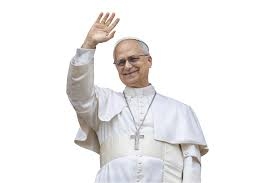
Pope Leo XIV arrived in Equatorial Guinea on Tuesday, receiving a ceremonial welcome from President Teodoro Obiang Nguema Mbasogo, cheering crowds and full state honours at the start of a closely watched visit that has sharpened attention on human rights in one of Africa’s most tightly controlled states. The trip marks the fourth and final stop of the pontiff’s 11-day African tour, after earlier visits to Algeria, Cameroon and Angola. Vatican News said the pope landed in Malabo at 11:31 a.m. local time and is due to remain in the country until Thursday, April 23.
The visit follows a three-day stay in Angola, where Leo adopted increasingly pointed language on governance, inequality and repression. Reuters reported that during his Angola leg, the pope denounced “despots and tyrants” and criticised systems that enrich the powerful while leaving ordinary people in hardship. While flying to Equatorial Guinea on Tuesday, Leo also paid tribute to his predecessor, Pope Francis, on the first anniversary of Francis’ death, calling him a “great gift” to the Church and the world.
That record has raised expectations over whether Leo will maintain the same tone in Equatorial Guinea, where Obiang’s government has for years faced allegations of repression, corruption and abuse of civil liberties. Reuters reported that ahead of the visit, Leo had emerged as a more outspoken defender of human dignity, justice and accountability during his Africa tour, repeatedly condemning authoritarianism and exploitation. In Equatorial Guinea itself, he warned that religion must never be used to justify violence or abuses of power.
Equatorial Guinea, despite its oil wealth, has long drawn criticism from international rights groups over arbitrary detention, limits on free expression and the shrinking of political space. Much of the country’s opposition and many independent voices operate from exile, particularly in Spain, after years of pressure from the authorities. The Associated Press noted that corruption and inequality remain central concerns in a country where large energy revenues have not translated into broad-based prosperity.
The symbolism of the pope’s visit is especially strong in a country where more than 70% of the population identifies as Catholic. Reuters and AP reported that Leo is expected to visit sites carrying deep political and moral significance, including institutions linked to suffering, remembrance and public scrutiny. That itinerary, together with his recent remarks across Africa, suggests the visit is likely to be judged not only by ceremony and diplomacy, but also by how directly he speaks to justice, freedom and the dignity of ordinary Equatorial Guineans.