
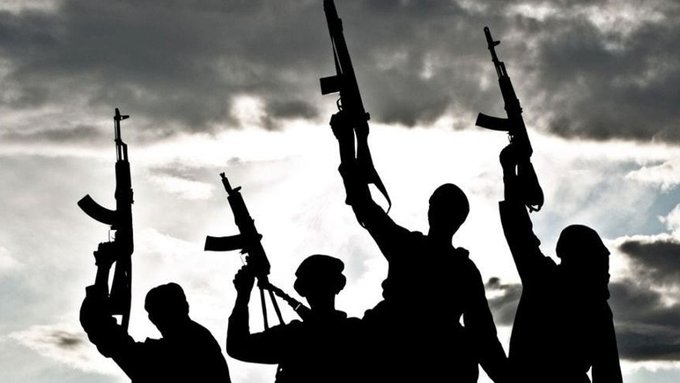
The al-Qaeda-linked Jama’at Nusrat al-Islam wal-Muslimin has released a propaganda video showing its April 25 assault on a Malian army camp and the airport in Sévaré, near Mopti, underscoring the growing operational reach of armed groups in Mali’s worsening security crisis.
The attack formed part of a wider wave of coordinated assaults carried out the same day across the country. Those attacks led to the recapture of Kidal by northern separatists and the killing of Mali’s defence minister, Gen. Sadio Camara, in Kati, near Bamako. Reuters reported that Camara was killed when a suicide attacker drove an explosives-laden vehicle into his residence during the offensive.
Analysts say the scale of the operation marked one of the most significant offensives by armed groups in Mali since 2012, when rebel and jihadist factions seized large parts of the north before a French-led military intervention pushed them back. The April attacks have raised fresh questions about the military government’s ability to secure major towns, strategic installations and areas close to the capital.
Bakary Sambe, regional director of the Dakar-based Timbuktu Institute, said the video showed that JNIM was no longer a force confined to remote rural zones.
“JNIM has demonstrated its ability to infiltrate urban areas, to penetrate high-security locations such as the airport and the military camp in Sévaré, but also to unsettle both the Malian army and its Russian allies, who were unable to defend Mali,” Sambe said.
The footage appeared to show JNIM fighters using a range of military tactics and equipment, including drones to monitor the airport area and guide fighters on the ground. The use of drones points to a more sophisticated battlefield approach and suggests that the group is increasingly able to combine conventional insurgent tactics with modern surveillance and targeting tools.
“What JNIM has managed to do is gradually trap Mali in a state of neither peace nor war,” Sambe added. “In this twilight zone, it is deploying an increasingly aggressive strategy while also carving out an image for itself as a political actor.”
The Malian government, which rarely publishes detailed casualty figures from attacks by armed groups, said the April 25 violence left one person dead and 16 others injured. However, international reports put the political toll much higher, citing Camara’s death as a major blow to the ruling junta.
On Thursday, authorities announced rewards for information leading to the arrest or “neutralisation” of JNIM leaders and northern separatist commanders, as Bamako faces mounting pressure to regain control of territory lost during the offensive.