

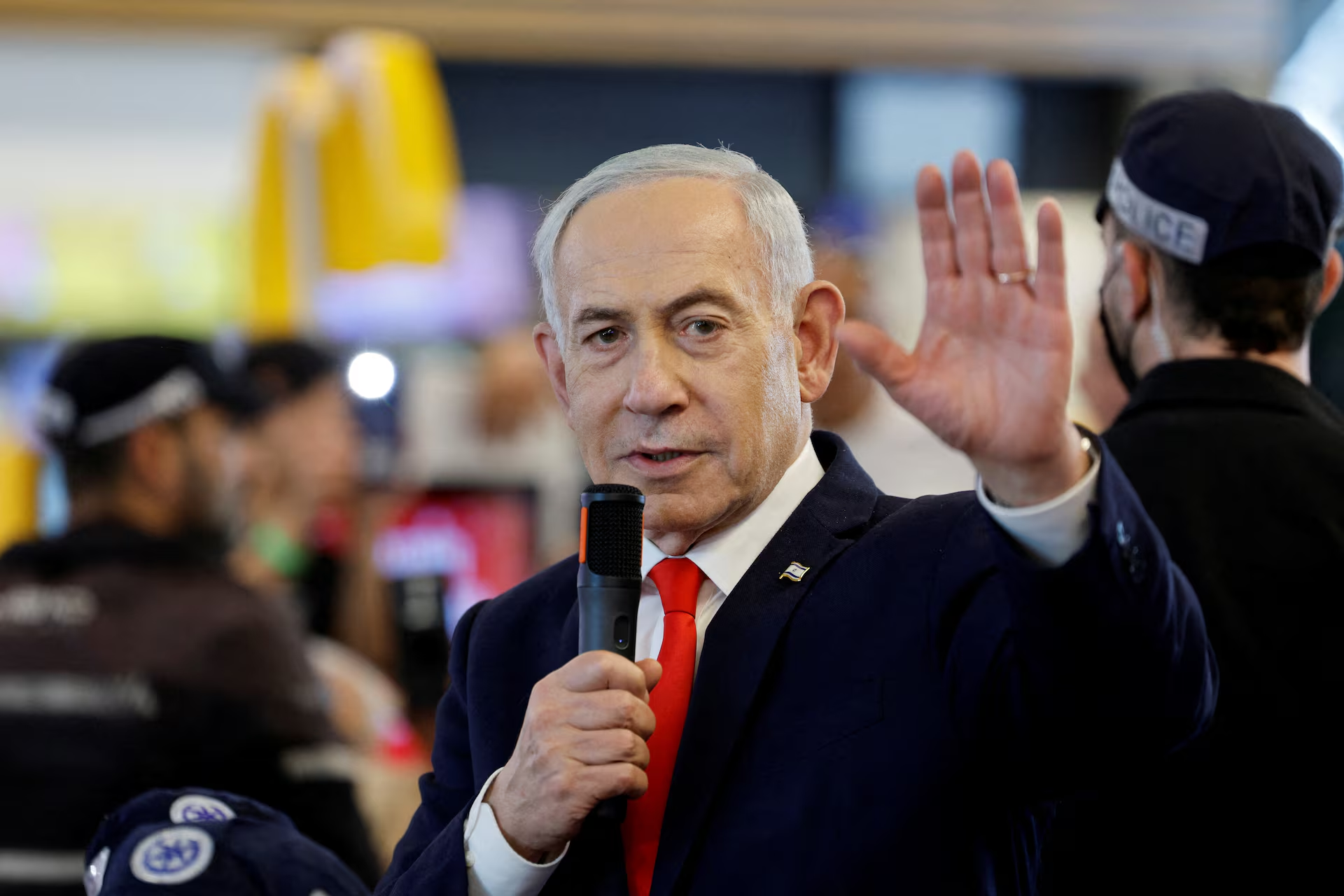
Prime Minister Benjamin Netanyahu’s hopes of remaining in office have suffered a setback after Israel’s parliamentary election produced no clear majority, leaving rival political groups facing difficult negotiations over the country’s next government.
Exit polls from the October 27, 2026, election suggested that Netanyahu’s governing alliance had lost support, although his Likud party remained the strongest individual political party.
The projections placed the prime minister’s right-wing bloc and the opposition associated with former military chief Gadi Eisenkot at approximately 51 seats each.
Neither side appeared close to securing the 61 seats needed to control Israel’s 120-member parliament, known as the Knesset.
Arab-led parties were projected to secure about 18 seats, making their position potentially important in negotiations over a new governing coalition.
Likud was estimated to have won 27 seats, down from the 32 it held following the previous election.
Despite the projected losses, Netanyahu remained determined to lead the next administration.
Speaking to supporters in Jerusalem early Wednesday, the prime minister called for a right-wing government and opposed any arrangement that would depend on Arab political parties.
His main challenger, Eisenkot, also expressed confidence that the election could open the way for a change in leadership.
Addressing supporters in Tel Aviv, the former military chief promised to pursue the formation of a new government.
However, the opposition’s path to power appeared complicated by disagreements among parties that might otherwise cooperate against Netanyahu.
Some potential partners remained unwilling to enter an arrangement involving Arab-led parties, creating another obstacle to securing a parliamentary majority.
The election took place against a background of political divisions, security concerns and disagreements over Netanyahu’s leadership.
The October 7, 2023, Hamas-led attack and subsequent wars remained important issues in the country’s political debate.
Other campaign concerns included military service exemptions for ultra-Orthodox Jews and disputes surrounding judicial independence.
Voter participation was particularly high, with official figures putting turnout at 77.7 per cent, the highest recorded in more than 20 years.
Counting continued on Wednesday, meaning the final distribution of parliamentary seats could still differ from the initial exit-poll estimates.
Once the results are established, President Isaac Herzog will consult political parties before selecting the politician considered most capable of forming a government.
That person must secure sufficient parliamentary support to establish a governing coalition.
With neither major bloc projected to command a majority, negotiations could prove lengthy and difficult.
Netanyahu can remain caretaker prime minister while the process continues.
If political parties fail to reach an agreement, Israel could face another election.
The immediate picture is therefore one of political uncertainty rather than a decisive change of government.
Netanyahu’s alliance may have weakened, but the projections leave him with a possible route to another term in office.



















