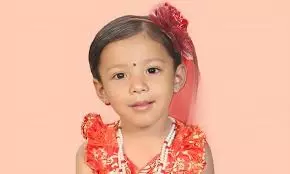
Kathmandu — Aryatara Shakya, aged two years and eight months, has been installed as Kathmandu’s new Kumari, the revered “living goddess” venerated by both Hindus and Buddhists. She succeeds her predecessor, who stepped down in keeping with tradition upon reaching puberty.
Chosen by a council of priests and elders, the Kumari is selected between ages two and four against exacting criteria—including flawless skin, eyes and teeth, and a temperament deemed fearless. Once enthroned, she is regarded as a divine embodiment and appears publicly during major festivals, when she is wheeled through the city in a chariot procession to bless devotees.
Clad in ceremonial red with a painted third eye, the Kumari bestows blessings as worshippers kneel to touch their foreheads to her feet—considered the highest form of reverence in Nepal. Outside festival days, Aryatara will reside in a temple palace, venturing out only rarely for religious duties.
While the role has historically meant an intensely secluded childhood, recent reforms allow private tutoring, limited access to television, and a small state stipend upon retirement—changes intended to balance religious tradition with child welfare. Even so, the Kumari’s movements and interactions remain closely regulated, reflecting the sanctity of the office.
Aryatara’s first major public appearance is expected on Thursday, the main day of the Dusain festival, when she will offer blessings to thousands of pilgrims, including Nepal’s president. For many Nepalis, the ceremony signals continuity after a sacred transition: the passing of divine guardianship from one child to the next, a centuries-old ritual at the heart of Kathmandu’s cultural and spiritual life.