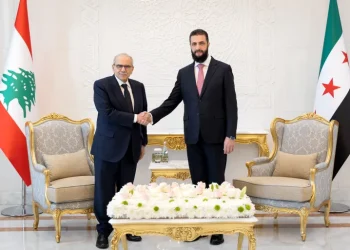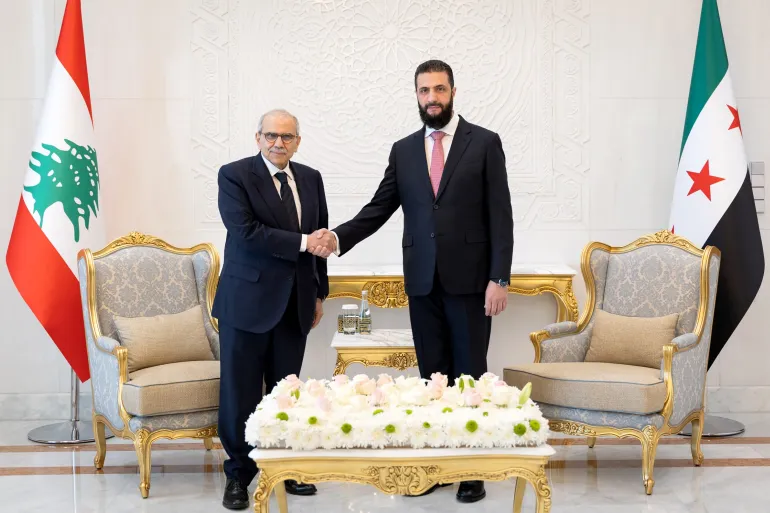
Lebanese Prime Minister Nawaf Salam and Syrian President Ahmad al-Sharaa have concluded talks in Damascus aimed at rebuilding relations between the two neighbours following the fall of Bashar al-Assad nearly 18 months ago.
Salam said “significant progress” had been made during Saturday’s discussions, which covered security cooperation, border management, transport, infrastructure, economic ties and the fate of detainees and missing persons. The visit was Salam’s second official trip to Syria since taking office, underscoring Beirut and Damascus’s efforts to redefine relations after years of tension shaped by Syria’s civil war and Assad’s alliance with Hezbollah and Iran.
A major item on the agenda was the status of more than 2,000 Syrians held in Lebanese prisons. Some are accused of terrorism-related offences, while others are alleged to have attacked Lebanese security forces. Syria has made their release a priority, and Lebanon transferred more than 130 Syrian prisoners in March to serve the remainder of their sentences in Syria.
“We discussed continuing efforts to address the issue of detained Syrians in Lebanon and to uncover the fate of the missing and forcibly detained in both countries,” Salam said.
The talks also focused on the porous 330-kilometre border, long used for smuggling people, drugs and weapons. Both governments have signalled a desire to strengthen coordination against cross-border trafficking and armed groups. Syrian authorities have recently announced arrests of alleged Hezbollah-linked cells, while Lebanon has pledged to bring all weapons under state control.
The political context is delicate. Hezbollah, once a powerful ally of Assad and a key part of Iran’s regional network, has lost its Syrian supply route since the change of government in Damascus. The group remains influential inside Lebanon and is currently engaged in renewed fighting with Israel despite a U.S.-brokered ceasefire.
Salam’s Damascus visit also comes before expected Lebanese-Israeli talks in Washington. He has said Lebanon’s priority is to reinforce the ceasefire, stop Israeli attacks, secure the release of detainees and agree on a timetable for Israeli withdrawal from southern Lebanon.
For Lebanon and Syria, the meeting signals an attempt to open a new chapter based on security coordination and economic cooperation. But the path remains complicated by Hezbollah’s future, Israeli military pressure, refugee and prisoner issues, and the unresolved legacy of decades of Syrian involvement in Lebanese affairs.