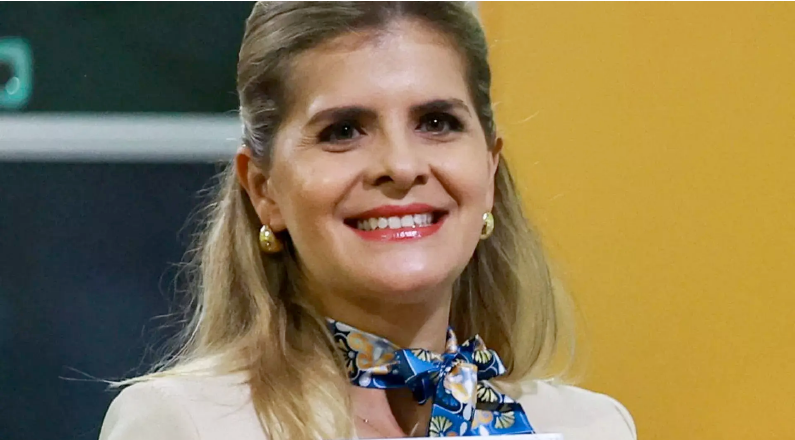
Costa Rica’s right-wing President Laura Fernández was inaugurated on Friday at the National Stadium in San José, promising a hard-line campaign against organised crime in a country long regarded as one of Latin America’s most stable democracies.
Fernández, a former minister and political ally of outgoing President Rodrigo Chaves, took office for a four-year term as supporters gathered for the ceremony. Her inauguration marks the beginning of a government that has placed security at the centre of its agenda amid rising violence linked to drug trafficking.
In her inaugural message, Fernández pledged to confront criminal networks with a “heavy-handed” approach and has previously promised a “war” on organised crime. Last week, she named Gerald Campos as security minister, signalling that public safety will be one of her administration’s first priorities.
Costa Rica, with a population of about five million, has traditionally been viewed as a regional model of peace, democracy and social stability. But recent years have brought a sharp increase in violence, with authorities linking much of the surge in homicides to drug trafficking and organised crime. The security crisis has become a central political issue and helped fuel support for Fernández’s tough-on-crime campaign.
The inauguration also drew international attention. Kristi Noem, representing the Trump administration, attended the ceremony in San José as a U.S. special envoy to a regional coalition focused on combating crime.
Fernández has presented herself as a continuation of Chaves’s political project. In a controversial move, Chaves will remain in the new administration as Minister of the Presidency and Finance Minister, posts that preserve his influence and provide him with continued immunity while he faces corruption allegations.
Her critics warn that the new government’s security-first approach could test Costa Rica’s democratic institutions, especially if it follows the model of leaders such as El Salvador’s Nayib Bukele, whose anti-gang crackdown has been praised by supporters but criticised by human rights groups.
For Fernández, the challenge will be to restore public confidence and reduce violence without undermining the rule of law. Her first months in office are expected to focus heavily on policing, prison policy and regional cooperation against drug-trafficking networks.