Senate President Godswill Akpabio and Deputy Speaker of the House of Representatives Benjamin Kalu have thrown their weight behind the Reserved Seats Bill, describing it as a critical step toward correcting the “structural imbalance” that keeps Nigerian women largely shut out of political leadership.
The National Assembly leadership gave the assurance in Abuja on Monday at the opening of the 2025 Law Week of the International Federation of Women Lawyers (FIDA) Nigeria, Abuja Branch, with the theme: “Advancing Women’s Representation: Reserved Seats and the Future of Nigeria’s Legislature.”
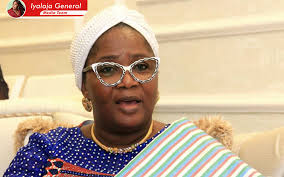
Akpabio, represented by Senator Idiat Oluranti, said the topic was timely and aligned with the broader push for gender equality and inclusiveness in governance.
He noted that women’s contributions were foundational, not secondary, recalling the role his mother played in instilling discipline, resilience and moral grounding in his life.
“The potential of women is not a matter of charity. It is knowledge, moral duty,” Akpabio said. “So when I fight for gender equality, when I speak for women, when I push for female representation, I’m doing it as a matter of policy.”
In his keynote address, Deputy Speaker Benjamin Kalu warned that Nigeria could no longer ignore the gross underrepresentation of women in its legislature.
Citing data from the National Bureau of Statistics, Kalu said women constitute 49.43% of Nigeria’s estimated 220 million people but occupy fewer than 5% of seats in the National Assembly, ranking the country 178th out of 182 globally in female parliamentary representation.
“This is a structural imbalance with real consequences for governance, development and national cohesion,” he said. “When women are absent from the legislature, perspectives disappear, conversations narrow, and our laws lose the balance that democracy requires. No nation can rise with half its talent standing outside the room.”
Kalu lamented that Nigerian women continue to face entrenched barriers — from party structures and campaign financing to sociocultural norms and political gatekeeping.
He said this reality informed his sponsorship of the Reserved Seats Bill (HB 1349), which proposes a temporary constitutional mechanism to guarantee a minimum number of female legislators at federal and state levels.
According to Kalu, estimates by the Policy and Legal Advocacy Centre (PLAC) suggest the framework would cost less than 1% of the National Assembly’s annual budget, calling it “a small investment for a major democratic correction.”
He added that closing gender gaps could unlock billions of dollars in productivity and growth for Nigeria, referencing global studies that project trillions in potential gains from gender parity.
Kalu, who also chairs the Constitution Review Committee, said the 10th House under Speaker Tajudeen Abbas has put inclusion at the heart of its agenda and is holding national dialogues, public hearings and consultations to ensure citizens’ voices shape the reforms.
He urged FIDA, the wider legal community and women’s groups to actively engage with the review process:
“We are closer to equitable representation now than ever before. This is the moment when commitment must outweigh comfort, and conviction must triumph over caution.”