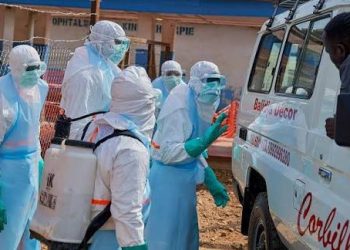
Nigeria’s response to a confirmed Ebola infection has entered a critical monitoring stage, with health officials tracing 53 possible contacts in Abuja following the evacuation of the infected patient to Switzerland.
The Nigeria Centre for Disease Control and Prevention (NCDC) says the individuals were identified during investigations into possible exposure to the virus, although none has been confirmed infected simply because of their contact status.
NCDC Director-General Jide Idris disclosed the findings during a briefing in Abuja on Sunday, October 25, 2026, outlining the measures being taken to prevent further transmission.
According to Idris, 44 of those identified were linked to a healthcare facility where the patient had received treatment.
The other nine comprised her husband, driver and chef, three medical workers who attended to her at another clinic, and three personnel involved in collecting samples for laboratory examination.
Health teams are monitoring the contacts for 21 days from their last possible exposure, the maximum recognised incubation period for Ebola disease.
During this period, officials will watch for symptoms and investigate any suspected infection requiring laboratory testing.
The confirmed patient, a 42-year-old woman, reportedly arrived in Abuja from Uganda on October 3 after travelling through Addis Ababa, Ethiopia.
Four days after her arrival, she developed symptoms and subsequently sought medical attention at a private healthcare facility on October 10.
She was admitted to another facility on October 11 as her condition required further medical attention.
Health authorities received notification of the suspected infection on October 19, while laboratory confirmation followed on October 20.
Tests identified the Bundibugyo virus, one of the viruses responsible for Ebola disease.
The patient’s reported symptoms included fever, diarrhoea, body pains and a sore throat, although no bleeding was documented.
An NCDC situation report dated October 24 indicated that she had shown considerable improvement while receiving treatment in isolation.
However, a subsequent development changed her treatment arrangements.
On Monday, October 26, Coordinating Minister of Health and Social Welfare Muhammad Ali Pate announced that the woman and her husband had departed Abuja for Switzerland under medical precautions.
Pate indicated that her condition had improved, although precautions remained necessary because of the possibility that she could still transmit the virus.
Meanwhile, a suspected Ebola infection reported in Rivers State on October 23 was ruled out following laboratory testing.
The Federal Government has activated national emergency response arrangements, strengthened disease surveillance and continued preparations for isolation and treatment where necessary.
The University of Abuja Teaching Hospital has also been assessed for its readiness to support the response.
Health authorities have urged identified contacts to cooperate with monitoring teams and report symptoms promptly.
With 53 people under observation, investigators remain focused on detecting possible secondary infections and preventing further spread.