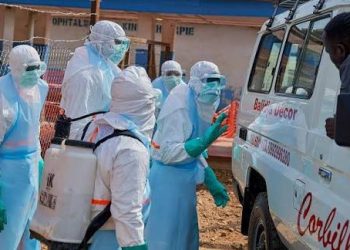
GOMA — Medical teams in eastern Democratic Republic of Congo are working under extreme conditions as they try to contain the country’s worst recorded Ebola outbreak, which has spread across seven provinces and killed more than 3,000 people.
Congolese government data showed that confirmed Ebola cases had reached 7,022, with 3,398 deaths, making the outbreak one of the deadliest ever recorded in Africa. Authorities said the virus had reached a seventh province, South Ubangi, after earlier spreading through several eastern and central regions.
The outbreak, declared in mid-May, is caused by the Bundibugyo species of Ebola, a rarer strain for which there is no licensed vaccine or targeted treatment. Uganda’s Health Ministry and the World Health Organization have both said early detection, isolation, case management and strict infection prevention remain critical because of the absence of strain-specific medical tools.
“It is not easy, you know, to work in my country, to see the community affected by an outbreak like Ebola without specific treatment and to work in this environment with violence,” said Fabrice Ngoyi Nsakalumpu, a medical activity manager with Médecins Sans Frontières, MSF. “We are managing, even though it is not easy, but we make the best.”
The response is especially difficult in eastern Congo, where armed conflict, population displacement and poor road access have made it harder for health workers to reach patients, trace contacts and monitor possible chains of transmission. UN officials said this week that efforts to slow the outbreak were showing some progress, but warned that it was still too early to say the epidemic had passed its peak.
Community mistrust has also complicated containment efforts. In some areas, health workers have faced hostility from relatives who want access to the bodies of loved ones, despite the high risk of infection during unsafe burials. Ebola spreads through direct contact with infected bodily fluids, including those of people who have died from the disease.
The World Health Organization has reported “encouraging signs” in parts of the response, including areas where transmission has slowed, but it has also warned that cases are still rising in some eastern zones. Africa CDC said the outbreak remains serious, with gaps in infection prevention and control still threatening containment efforts.
Uganda, which recorded 20 confirmed cases and two deaths linked to infections imported from DR Congo, has been declared Ebola-free after completing the required monitoring period without new confirmed cases. Fifteen of Uganda’s cases were imported from Congo, while five were locally acquired among contacts and health workers.
For Congo’s responders, the immediate challenge remains urgent: isolate patients quickly, win community trust, protect health workers and prevent the virus from moving further through conflict-affected communities where the health system is already under severe strain.