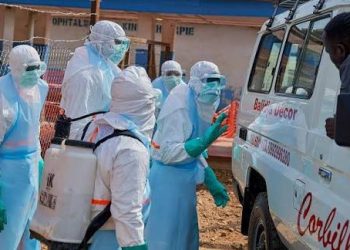
NAIROBI — Dozens of nurses marched through Nairobi on Thursday to protest what they described as the Kenyan government’s failure to resolve long-running labour grievances, as a nationwide strike continued to disrupt public health services.
Wearing white uniforms and carrying placards, the nurses marched towards the offices of the Salaries and Remuneration Commission, SRC, demanding progress on a Collective Bargaining Agreement they say has been delayed for years. The Kenya National Union of Nurses and Midwives said the strike would continue until the SRC issues a letter of no objection to the 2017 CBA, a step the union says is needed before the agreement can be registered at the Employment and Labour Relations Court.
Seth Panyako, secretary-general of the union, said nurses had endured years of back-and-forth between the SRC and the Council of Governors over pay and employment terms.
“For many years, since 2017 up to now, we have had push and pull between SRC and the Council of Governors,” Panyako said. “Today we are visiting SRC to ask them to issue a letter of no objection on our CBA.”
The protest came as talks between the nurses’ union and the Council of Governors remained deadlocked. The governors have argued that the contested CBA was signed under difficult circumstances and is financially unsustainable, while the union insists county governments must honour commitments made to health workers.
Health professionals warned that the continued industrial action was taking a heavy toll on patients. Collins Otieno Ajwang, president of Kenya’s National Nurses Association, said the strike had entered its 37th day and had severely affected public health facilities across the country.
“Our concern as fellow health professionals is what this continuing delay is now costing patients and the healthcare system,” Ajwang said.
Joseph Chebii, secretary-general of the clinical officers’ association, also urged the national government, county governments, unions and SRC to return to negotiations, warning that preventable deaths could rise if the standoff continues.
The nurses’ demands include implementation of the 2017 return-to-work agreement, progress on the CBA, career progression guidelines and settlement of outstanding salary-related issues. Reports from several counties indicate that public health services have been paralysed or severely strained since nurses joined the industrial action.
The dispute reflects Kenya’s wider challenge in managing devolved healthcare, where county governments employ many frontline workers but pay and benefits are shaped by national institutions and fiscal controls.
For patients relying on public hospitals and clinics, the strike has meant longer waits, reduced services and growing uncertainty. For nurses, Thursday’s protest was another attempt to force action on promises they say have remained unresolved for nearly a decade.