KINSHASA, Democratic Republic of Congo
Health authorities in the Democratic Republic of Congo are racing to contain a sharp increase in Ebola infections in North Kivu province, where cases have surged by 73 percent despite signs that the outbreak is slowing in neighbouring Ituri.
The contrasting figures highlight the uneven spread of the deadly virus across eastern Congo, where overstretched treatment facilities and insecurity continue to complicate efforts to control transmission.
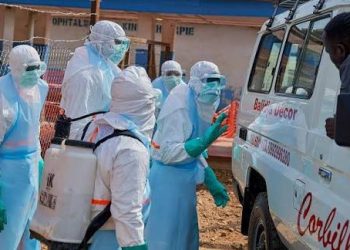
Ituri, previously the outbreak’s epicentre, recorded a 26 percent decline in infections during September. However, the rapid increase in North Kivu has raised concerns about the virus spreading into additional communities. At Mabalako General Hospital, one of the facilities responding to the emergency, healthcare workers are struggling to accommodate patients as admissions rise.
Guy Mutombo, operations officer for North Kivu’s Ebola response, warned that treatment facilities were approaching their limits and called for additional isolation centres across affected health zones. The World Health Organization (WHO) recently visited Mabalako General Hospital to assess its capacity and support efforts to strengthen emergency treatment services.
The virus has spread beyond major population centres, including Beni, into remote villages where access to healthcare remains limited. According to the WHO’s September 25 update, the country had recorded 7,890 confirmed cases and 3,799 deaths as of September 23.
Ituri accounted for 6,032 infections and 2,764 deaths, while North Kivu had registered 1,480 cases and 884 fatalities.
The outbreak has now affected 63 health zones across seven provinces, underscoring the continuing risk of geographical expansion.
Health officials are particularly concerned about delayed detection, overcrowded facilities and the difficulty of tracing people exposed to infected patients.
The current outbreak involves the Bundibugyo Ebola virus, for which no specifically approved vaccine or treatment is available. Experimental vaccination and treatment studies are underway, while healthcare teams continue strengthening surveillance, contact tracing and clinical care.
The WHO has also warned that armed conflict, displacement and population movements are complicating containment efforts and increasing the risk of cross-border transmission. North Kivu previously experienced a devastating Ebola outbreak between 2018 and 2020, which killed thousands and exposed serious weaknesses in the region’s healthcare infrastructure.
Although declining infections in Ituri offer some encouragement, health authorities warn that the epidemic remains far from contained. The immediate priority is expanding treatment capacity, identifying new infections quickly and preventing further transmission in communities where healthcare services are already under severe pressure.
With treatment centres filling up and infections spreading through rural communities, the coming weeks will be critical to controlling the outbreak in eastern Congo.