KINSHASA — The Ebola outbreak caused by the Bundibugyo virus in the Democratic Republic of Congo has spread to two additional health zones, deepening concern over the country’s largest and deadliest Ebola epidemic on record.
The World Health Organization said the newly affected areas are Bulu health zone in Sud Ubangi province, in the north-west of the country, and Dungu health zone in Haut-Uélé province, near the border with South Sudan. The development brings the number of affected health zones to 63 across seven provinces: Bas-Uélé, Haut-Uélé, Ituri, North Kivu, South Kivu, Sud Ubangi and Tshopo.
As of September 23, DR Congo had reported 7,890 confirmed cases and 3,799 deaths, representing a crude case fatality ratio of 48.1 percent, according to WHO. A total of 1,966 people had recovered.
WHO said the latest geographic expansion increases the risk of cross-border transmission, particularly because the newly affected areas lie close to the Central African Republic and South Sudan. Health officials have also warned that insecurity, displacement and limited access to some communities are slowing case detection, contact tracing and treatment.
“It’s very difficult to see Ebola in isolation because even our response to Ebola is affected by the conflict, because there is displacement and there is an access problem to some areas,” WHO Director-General Tedros Adhanom Ghebreyesus said.
The Bundibugyo strain remains especially difficult to control because there are no approved vaccines or specific treatments for it. WHO says early symptoms, including fever, fatigue, headache and sore throat, can resemble malaria, typhoid and other common illnesses, making early diagnosis difficult without laboratory testing.
Ituri province remains the epicentre of the outbreak, accounting for 6,032 confirmed cases since the epidemic began, including 868 new confirmed cases reported in the previous 21 days. North Kivu is the second most affected province, with 1,480 confirmed cases, including 567 reported in the same 21-day period.
WHO said North Kivu has recorded the highest case fatality ratio in the outbreak, at 59.7 percent, and investigations are continuing to determine why mortality is higher there. Health workers in the province say fear and misinformation are keeping some patients away from treatment centres until their illness is advanced.
“Patients think that if they arrive at the hospital, they will be immediately sent to the treatment centre to die,” said Dr Michel Paluku Mukuloli, who works at a hospital in Butembo, North Kivu.
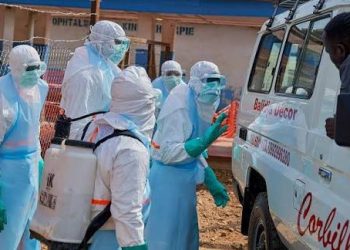
The outbreak is unfolding in a complex humanitarian environment marked by armed conflict, population movement, displacement and pressure on health services. WHO said these conditions continue to hamper surveillance, case finding, infection prevention, contact tracing and access to timely care.
The agency said 32,342 contacts required follow-up as of September 23, with 26,980, or 83.4 percent, successfully monitored during the previous 24 hours. But Africa CDC Director-General Dr Jean Kaseya has warned that the scale of confirmed infections suggests many more possible contacts may still be missing from official tracing lists.
North Kivu has previously been at the centre of several Ebola outbreaks, including the 2018-2020 epidemic, which was then DR Congo’s largest and deadliest. That outbreak was caused by the Zaire strain, while the current epidemic is caused by Bundibugyo, a less common species of Ebola virus.
WHO says controlling the outbreak will depend on faster detection, safe isolation and care, contact tracing, safe burials, community engagement and stronger access to insecure areas. Without those measures, officials warn that the virus could continue moving through communities and across borders.