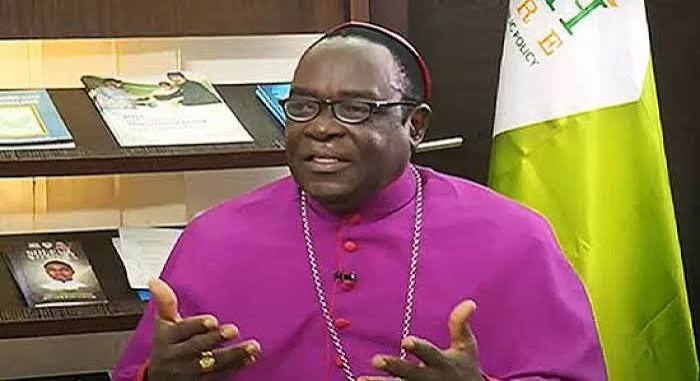
With Nigeria’s 2027 general elections approaching, Catholic Bishop of Sokoto Diocese, Matthew Kukah, has questioned the habit of politicians making ambitious campaign promises without explaining how they intend to fulfil them.
The cleric said voters should be more careful about accepting attractive pledges, particularly when candidates provide little evidence that their proposals are achievable.
Kukah raised the concern on Thursday, November 12, 2026, during a public symposium held in Abuja.
The event was organised by the National Institute for Legislative and Democratic Studies in collaboration with the Kukah Centre.
Discussions at the gathering centred on political communication, election security and the challenges facing Nigeria’s democracy.
Speaking to participants, Kukah criticised what he described as a pattern in which politicians present appealing plans during campaigns but struggle to deliver after winning elections.
He illustrated his argument with the story of a politician who sought public support using pictures of well-constructed roads, bridges, beautiful houses and neatly dressed schoolchildren.
The images, according to the bishop, helped persuade residents to vote for the candidate.
However, the promised developments failed to appear after the politician assumed office.
Three years later, frustrated residents approached their representative to demand an explanation for the projects that had not been delivered.
Rather than addressing their concerns directly, the politician reportedly argued that making promises during an election campaign was different from carrying them out in government.
Kukah used the example to highlight the gap he believes often exists between political campaigns and actual governance.
He said some elected officials begin complaining about inadequate government resources after assuming office, despite having made extensive commitments to voters.
Others, he observed, claim they only discovered the poor financial condition of government when they took over responsibility.
The bishop questioned why candidates seeking public office would make far-reaching promises without first considering the resources required to implement them.
He encouraged Nigerians to examine campaign proposals carefully and demand practical explanations from those seeking their votes.
Kukah also called for greater public accountability and urged citizens not to allow ethnic or religious considerations to overshadow questions about leadership and performance.
Former Independent National Electoral Commission Chairman, Professor Attahiru Jega, also spoke at the symposium.
Jega stressed the importance of responsible political communication, credible electoral institutions and campaigns centred on issues affecting citizens.
Political activist Aisha Yesufu similarly highlighted the need for public participation and the protection of democratic freedoms.
The discussions reflected concerns about political accountability as preparations for the next general elections gradually gather attention.
For Kukah, voters have a responsibility to examine what candidates promise before elections and continue demanding explanations after they assume office.