JERUSALEM, Israel
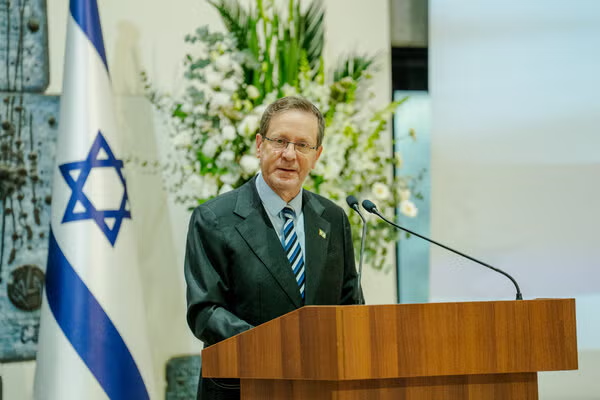
Israeli President Isaac Herzog has selected opposition leader and former military chief Gadi Eisenkot to form the country’s next government, dealing a significant political setback to Prime Minister Benjamin Netanyahu following an inconclusive general election.
Herzog announced the decision on Saturday after consultations with political parties represented in Israel’s 120-seat parliament, the Knesset.
Eisenkot, leader of the Yashar party, will formally receive the mandate on Sunday, November 8, giving him 28 days to assemble a governing coalition, with a possible 14-day extension.
The decision follows the October 27 election, in which neither Netanyahu nor Eisenkot secured the 61 parliamentary seats required to form a majority government. Netanyahu’s right-wing and religious alliance emerged as the largest bloc with 53 seats, while Eisenkot’s four-party opposition alliance secured 48.
However, Eisenkot gained an advantage during presidential consultations when parties representing 67 lawmakers recommended him for the premiership, compared with 46 backing Netanyahu. The remaining seven lawmakers, belonging to United Torah Judaism, declined to endorse either candidate.
Despite securing more recommendations, Eisenkot faces difficult coalition negotiations.
Two Arab-led parties representing Palestinian citizens of Israel won a record 19 seats and endorsed his nomination, potentially providing the parliamentary support needed to replace Netanyahu.
However, Eisenkot has previously rejected forming a coalition with Arab-led parties, while some of his political allies strongly oppose such an arrangement.
Other possibilities include securing support from ultra-Orthodox parties traditionally aligned with Netanyahu or negotiating a broader national unity government.
Netanyahu, Israel’s longest-serving prime minister, has called for national unity while warning against a government dependent on Arab-led parties.
Eisenkot, meanwhile, has criticised Netanyahu’s handling of the war in Gaza and opposed several far-right figures within his governing coalition.
The 66-year-old former army chief, who commanded Israel’s military between 2015 and 2019, entered politics in 2022 and briefly served in Netanyahu’s wartime cabinet following the October 2023 Hamas-led attacks.
His political challenge comes as Israel faces deep divisions over security, relations with Palestinians, military conscription and the country’s future leadership.
Importantly, Herzog’s decision does not automatically make Eisenkot prime minister.
Netanyahu will remain in office while coalition negotiations continue.
If Eisenkot fails to form a government, another candidate could receive the mandate, potentially opening the door for Netanyahu to make another attempt.
Failure to establish a viable coalition could ultimately force Israel into another general election, extending the country’s political uncertainty.