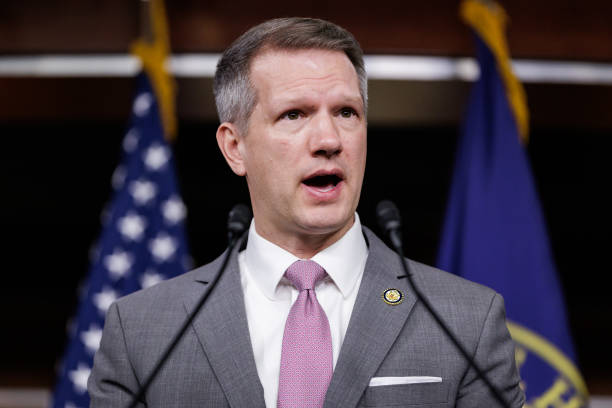
A deadly attack in Plateau State has reinforced United States Congressman Riley Moore’s opposition to any move to remove Nigeria from Washington’s Country of Particular Concern (CPC) designation, with the lawmaker arguing that continued violence against Christian communities shows that serious security concerns remain unresolved. Moore made the position known in a post on his official X account while reacting to the latest violence in the Middle Belt.
The congressman was responding to an attack on the Bin-Per community in Mangu Local Government Area of Plateau State, where at least 24 people were killed by gunmen. Reports said the incident occurred between Monday night and Tuesday, with victims later given a mass burial.
Moore argued that the latest incident provided further reason for the US State Department to retain Nigeria on the CPC list. He said the situation in the Middle Belt had not improved enough to justify removing the designation.
This is exactly why the @StateDept cannot lift Nigeria’s CPC designation.”
The Republican congressman from West Virginia’s Second Congressional District also referred to what he described as continued attacks on Christians in the region. He maintained that the Nigerian government must do more to protect affected communities and address the violence.
His comments followed a statement from the US Bureau of African Affairs condemning the Plateau attack. The bureau said dozens of people had been killed while sleeping in their homes and urged Nigeria to fulfil its commitments to protect Christian communities and ensure that those responsible for violence are held accountable.
The renewed debate over Nigeria’s CPC status comes amid continued engagement between Abuja and Washington on religious freedom and security. Moore has also criticised an earlier decision by the Biden administration to remove Nigeria from the designation, arguing that the country should not again be taken off the list while attacks continue.
Nigeria’s CPC designation has become an important issue in US-Nigeria relations, particularly as Washington continues discussions with Nigerian officials over protecting religious communities. Recent bilateral engagements have included discussions on security, accountability and measures aimed at addressing violence.
Moore’s latest intervention therefore places renewed pressure on the US administration as it considers Nigeria’s religious-freedom record, while the Nigerian government faces continuing calls to improve security and protect communities affected by violence.