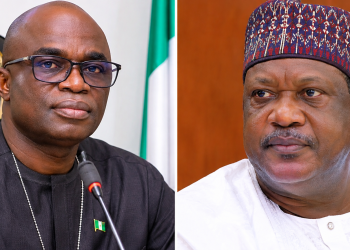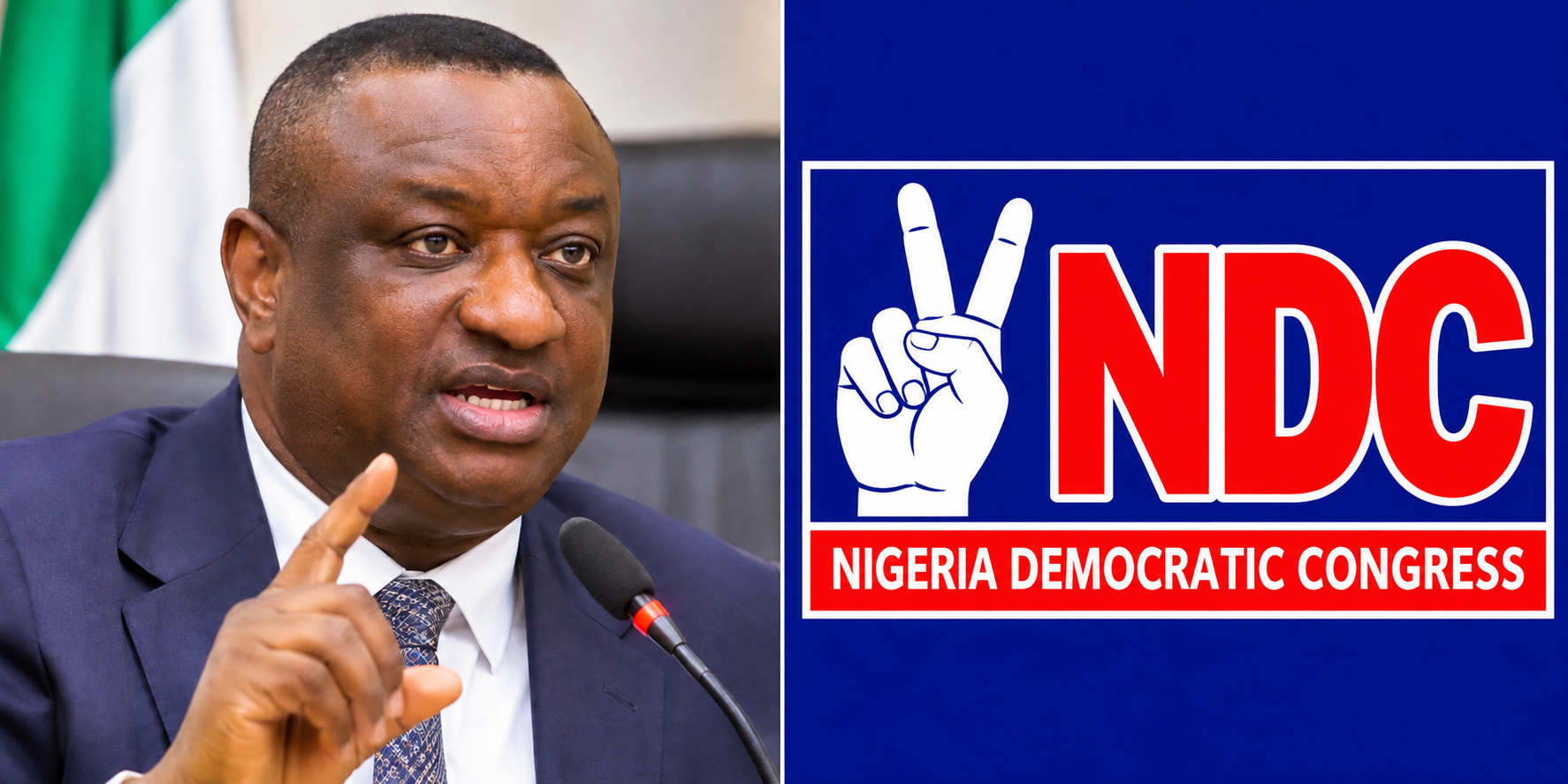
A political gathering in Lagos where supporters sang Nigeria’s former national anthem has drawn criticism from Aviation and Aerospace Development Minister Festus Keyamo, who wants the leadership of the Nigeria Democratic Congress (NDC) to explain its position on the matter.
The minister gave the party’s national leader, Senator Seriake Dickson, 48 hours to establish whether singing ‘Arise, O Compatriots’ instead of the official national anthem was a decision endorsed by the party.
The controversy stems from a town hall meeting held in Oregun, Lagos, on Thursday, November 12, 2026. Among those in attendance were the NDC presidential candidate, Peter Obi, and the party’s governorship candidate in Lagos, Funso Doherty.
The meeting was disrupted by individuals wielding cutlasses, sticks and stones, forcing some of those present to flee.
Writing on X on Saturday, Keyamo argued that deliberately substituting the national anthem could raise questions about loyalty to the country and respect for its sovereignty. He went further to suggest that such conduct could point to secessionist intentions.
But the NDC disputed the minister’s interpretation of what happened.
Its National Publicity Secretary, Osa Director, said Obi neither encouraged nor instructed anyone to disregard the official anthem. He attributed the incident to frustration among supporters following the disruption of the meeting.
The party also accused the ruling All Progressives Congress (APC) of being behind the attack, an allegation that has not been independently established.
For his part, Doherty insisted that ‘Nigeria, We Hail Thee’ was also performed during the gathering.
The controversy also brought President Bola Tinubu’s popular political song, ‘On Your Mandate’, into the discussion. Keyamo maintained that singing the song at public functions was different from replacing the national anthem.
He said nothing prevented Obi from adopting the former anthem as a political song, provided it was not used to displace the official one.
Keyamo equally defended the Police Band’s instrumental performances at presidential engagements, explaining that similar practices existed under previous governments.
Despite his criticism, the minister acknowledged during a Friday interview on Eagle 102.5 FM that he knew of no specific legal punishment for singing the former anthem.
‘Arise, O Compatriots’ served as Nigeria’s national anthem from 1978 until May 29, 2024, when Tinubu signed legislation restoring ‘Nigeria, We Hail Thee’, the anthem adopted at independence in 1960.
Meanwhile, the NDC rejected suggestions that Obi harboured secessionist ambitions. The party insisted that its presidential candidate remained committed to national unity and urged attention to the more pressing challenges confronting the country.