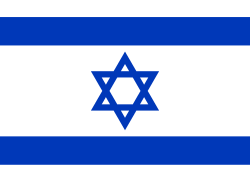
Israel’s political leaders are holding crucial consultations to form a new government following an inconclusive parliamentary election, with Prime Minister Benjamin Netanyahu facing an increasingly difficult challenge to remain in power. President Isaac Herzog has been meeting representatives of political parties at his official residence in Jerusalem to determine which candidate should receive the mandate to form the country’s next coalition government.
The consultations, which began on Wednesday, November 4, continued on Thursday as rival political blocs sought to secure enough parliamentary support to establish a governing majority.
Former military chief Gadi Eisenkot has emerged with more parliamentary endorsements than Netanyahu, although significant disagreements among opposition parties continue to complicate efforts to form a government.According to Reuters, 67 members of the 120-seat Knesset recommended Eisenkot for prime minister, compared with 46 who endorsed Netanyahu.
Israel’s Election Results Leave Parliament Divided
The October 27 parliamentary election failed to produce a clear majority for either of the country’s main political alliances. Netanyahu’s Likud party remains the largest individual party, securing 27 seats. However, his broader alliance of right-wing and religious parties fell short of the parliamentary majority required to govern.
The opposition, led by Eisenkot’s Yashar party, also lacks sufficient seats to form a government independently, making support from other political parties essential.
Ultra-Orthodox Party Deals Setback to Netanyahu
Netanyahu’s efforts to secure another term suffered a further setback when United Torah Judaism, a longstanding political ally, declined to recommend him for prime minister. The party’s decision reflects disagreements over issues affecting ultra-Orthodox communities, particularly military service requirements for religious students.
Its refusal to endorse Netanyahu has complicated the incumbent prime minister’s efforts to rebuild the coalition that previously supported his government.
Meanwhile, the Arab-led Joint List and Ra’am parties have endorsed Eisenkot, giving him additional support in the presidential consultations. However, several parties that recommended Eisenkot have previously opposed governing alongside Arab parties, creating uncertainty about whether their combined endorsements can translate into a functioning coalition.
Herzog to Announce Decision on Sunday
President Herzog has announced that he intends to decide on Sunday, November 8, 2026, which lawmaker will receive the first opportunity to form a government. Under Israeli law, the selected candidate will initially have 28 days to negotiate a coalition, with a possible 14-day extension. If negotiations fail, further attempts to form a government may follow, and another national election could eventually become necessary.
The newly elected Knesset is expected to convene on November 10.
Election Integrity Dispute Adds to Political Tensions
The government-formation process is also taking place amid disagreements surrounding the credibility of the October election. Netanyahu has questioned the results and raised allegations of voting irregularities involving Arab-led political parties.
However, Israel’s Central Election Committee has stated that it found no evidence of irregularities compromising the election results. President Herzog has recognised the certified results and urged political leaders to respect the democratic process while working towards a stable government. The political uncertainty comes at a sensitive time for Israel, with the incoming government expected to address national security, economic pressures, regional relations and disagreements over military service.
For now, Netanyahu remains in office while negotiations continue, but his political future depends on whether he or another candidate can assemble a viable parliamentary coalition. The next decisive development is expected on November 8, when President Herzog announces who will receive the mandate to form Israel’s next government.