NAIROBI, KENYA
Kenya has confirmed four additional Ebola infections, bringing the country’s total to seven cases, including one death, as health authorities intensify emergency surveillance and contact tracing to prevent the deadly virus from spreading further. The Ministry of Health announced the new infections on Saturday, October 17, revealing that three healthcare workers who treated the country’s first Ebola patient had tested positive for the Bundibugyo strain.
The fourth patient is a male relative of the first victim, who died on October 5 after returning from the Democratic Republic of Congo.
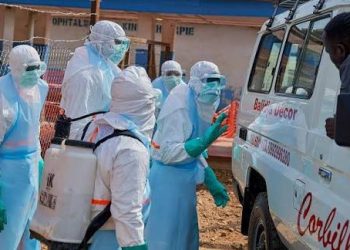
Health Director-General Patrick Amoth confirmed that the infected medical personnel included two men, aged 29 and 35, and a 32-year-old woman who attended to the initial patient between October 3 and 4.
All four newly diagnosed patients had already been placed under quarantine before developing symptoms, allowing health officials to isolate them promptly and begin treatment.
Laboratory examinations conducted by Kenya’s National Virology Reference Laboratory and the Kenya Medical Research Institute confirmed the infections. Authorities disclosed that 128 of the 130 people identified as having potentially been exposed to the first patient had been traced and quarantined, representing an impressive 98.5 percent contact-tracing coverage. Efforts are continuing to locate the remaining two individuals.
Despite the growing number of confirmed infections, the government insists that there is currently no evidence of uncontrolled community transmission. Officials maintain that the risk to the general population remains low, although the latest cases represent the first known locally transmitted Ebola infections in Kenya. The outbreak originated from an infected Kenyan man who had been living in the Democratic Republic of Congo before travelling through Uganda and arriving in Nairobi on October 3.
His subsequent death triggered emergency investigations and heightened disease surveillance across the country. The situation has raised fresh concerns about cross-border transmission as neighbouring Congo battles a devastating Ebola epidemic involving more than 9,000 confirmed infections and over 4,000 deaths.
Unlike some other Ebola strains, the Bundibugyo virus currently has no approved vaccine or specific antiviral treatment, making rapid diagnosis, isolation and supportive medical care especially important. Kenyan authorities have strengthened screening at border crossings and medical facilities while urging citizens to report suspected exposures promptly. No restrictions have been imposed on travel, trade or public gatherings.
With healthcare workers now among those infected, the coming days will test Kenya’s ability to contain the outbreak and protect vulnerable communities from further transmission.