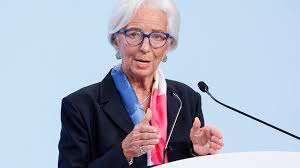
The former head of the International Monetary Fund and current European Central Bank President Christine Lagarde has reiterated the importance of safeguarding central bank independence, warning that political interference in monetary policy could undermine economic stability.
Speaking on global financial governance, Lagarde stressed that central banks must be allowed to operate free from short-term political pressures in order to effectively manage inflation, maintain price stability, and support sustainable economic growth. She argued that weakening institutional independence could lead to policy decisions driven by electoral cycles rather than long-term economic needs.
Her comments come amid increasing global debates over the role of central banks, particularly as governments in several countries face mounting fiscal pressures, rising debt levels, and public dissatisfaction with high interest rates. Analysts say these conditions have intensified scrutiny of monetary authorities and their policy decisions.
Lagarde emphasized that credible and independent central banks play a critical role in anchoring inflation expectations and maintaining investor confidence. She warned that any erosion of this independence could increase market volatility and reduce the effectiveness of monetary policy tools.
Economists widely support the principle of central bank autonomy, noting that countries with stronger institutional independence tend to experience more stable inflation outcomes and improved economic resilience. However, some policymakers argue that central banks should coordinate more closely with governments during periods of economic stress.
The remarks are particularly relevant as major economies continue to navigate a challenging environment marked by inflationary pressures, uneven growth, and geopolitical uncertainty. Central banks across the world have tightened monetary policy in recent years, leading to higher borrowing costs for households and businesses.
Despite these challenges, Lagarde maintained that preserving institutional independence remains essential for long-term macroeconomic stability. She urged policymakers to resist pressures that could compromise the credibility of monetary institutions.
Her statement adds to ongoing discussions about the balance between democratic accountability and technocratic decision-making in global economic governance.