ENUGU, Nigeria — Governors of Nigeria’s five South-East states have endorsed deeper regional cooperation on intelligence sharing, infrastructure coordination and long-term economic integration, as leaders at the South East Vision 2050 Regional Stakeholder Forum pledged to move from policy declarations to execution.
The forum, hosted by the South East Development Commission (SEDC) in Enugu, brought together federal officials, state governments and private-sector stakeholders around a 25-year development blueprint intended to address infrastructure gaps and improve regional competitiveness.
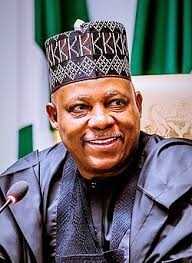
Vice President Kashim Shettima, who opened the event, described the South-East as central to Nigeria’s economic future and said stronger institutional cooperation would be necessary to unlock the region’s entrepreneurial and diaspora capital potential. He also linked the federal government’s support for SEDC to the need to close long-standing infrastructure deficits.
State leaders used the platform to outline priority areas for integration. Abia State Governor Alex Otti stressed energy coordination, arguing that existing generation capacity around Aba could anchor broader regional power planning if states align policy and grid frameworks.
Anambra Governor Chukwuma Soludo pushed for a practical sequence of flagship projects, naming inter-state highways, a regional rail link, port access and a joint security architecture as critical enablers of trade and mobility.
Ebonyi Governor Francis Nwifuru highlighted food-system coordination, while Enugu Governor Peter Mbah argued that sustainable regional transformation would still require alignment with federal financing and policy instruments.
The key takeaway from Enugu was a shift toward “shared responsibility” across the five states, with governors signaling that fragmented, state-by-state planning can no longer deliver the scale needed for industrialization, logistics efficiency and security stabilization.
Analysts note that the ambition of Vision 2050 will be judged less by conference communiqués than by near-term deliverables—especially common project pipelines, harmonized regulatory frameworks and pooled funding models that can survive political cycles. The governors’ public alignment is a significant political signal; implementation discipline is now the test.