

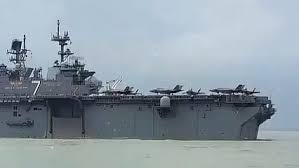
WASHINGTON — The U.S. aircraft carrier USS Nimitz and its strike group have entered the Caribbean Sea amid heightened tensions between Washington and Havana, following the indictment of former Cuban leader Raúl Castro over the 1996 shootdown of two civilian aircraft.
U.S. Southern Command announced the arrival of the Nimitz Carrier Strike Group on Wednesday, describing the deployment as a demonstration of readiness and U.S. military presence in the region. The strike group includes the aircraft carrier USS Nimitz, Carrier Air Wing 17, the guided-missile destroyer USS Gridley and the replenishment oiler USNS Patuxent.
The deployment came as U.S. federal authorities unsealed charges against Castro and five Cuban fighter pilots in connection with the downing of two planes operated by Brothers to the Rescue, a Miami-based Cuban exile group. Four people were killed in the 1996 incident, which has long been a flashpoint in U.S.-Cuba relations.
According to the indictment, Castro, who was Cuba’s defence minister at the time, allegedly authorised the use of deadly force against the unarmed aircraft. The pilots are accused of taking part in the operation that led to the planes being shot down over international waters. The charges include conspiracy to kill U.S. nationals, though most of those named are not in U.S. custody.
The arrival of the Nimitz has intensified speculation about Washington’s next steps, but U.S. officials have not announced any military operation against Cuba. Reports citing U.S. officials described the carrier’s presence as a show of force and part of a wider campaign to increase pressure on Havana, rather than an indication of imminent combat action.
The Nimitz had recently been operating in South American waters as part of Southern Seas 2026, a U.S. Navy deployment aimed at strengthening maritime cooperation with regional partners. It visited Chile in April and later conducted exercises with the Brazilian Navy in the Atlantic Ocean.
The move comes at a difficult moment for Cuba, which is facing severe economic hardship, shortages and growing public frustration. Havana has not accepted U.S. accusations and has historically condemned American military pressure in the Caribbean as a violation of its sovereignty.
Analysts say the combination of a high-profile criminal indictment and the presence of a U.S. carrier strike group could further strain relations between the two countries. For now, the deployment sends a clear message that Washington is prepared to project military power in the region as legal and diplomatic pressure on Cuba increases.



















