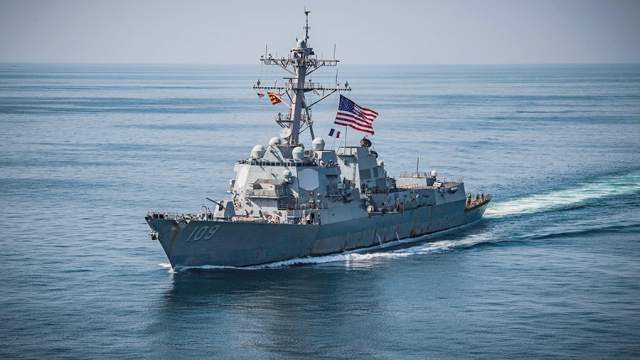
The United States military has begun clearing sea mines from the Strait of Hormuz in a high-stakes effort to reopen one of the world’s most important energy chokepoints, even as commercial shipping remains disrupted and the wider confrontation with Iran continues to cast doubt over how quickly normal traffic can resume. U.S. Central Command said the operation is aimed at establishing a new safe passage for vessels through the narrow waterway, through which roughly a fifth of the world’s seaborne oil and liquefied natural gas normally passes.
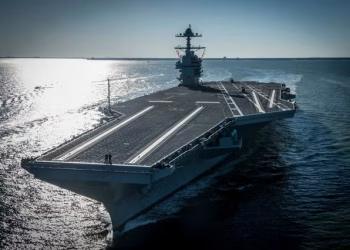
In a statement, CENTCOM said destroyers USS Frank E. Peterson and USS Michael Murphy had transited the strait and were operating in the Arabian Gulf as part of the broader mine-clearance mission. Admiral Brad Cooper, the commander of CENTCOM, said U.S. forces had “began the process of establishing a new passage” and would share that route with the maritime industry to support the safe flow of commerce. Reuters separately reported that President Donald Trump said U.S. forces had already begun clearing mines allegedly laid by Iran’s Revolutionary Guards.
The mine-clearing effort comes after weeks of severe disruption in Hormuz caused by the U.S.-Iran war and the subsequent diplomatic breakdown. Although a temporary ceasefire briefly raised hopes of renewed access, the situation worsened again after U.S.-Iran peace talks in Pakistan failed to produce an agreement. Washington then moved toward a naval blockade focused on ships going to and from Iranian ports, while still allowing vessels bound for non-Iranian destinations to transit the strait.
That means the waterway is not fully back to normal despite the start of mine-clearing. Reuters reported that some tankers have continued to avoid Hormuz altogether ahead of the U.S. blockade, while others have reversed course or delayed entry. A few vessels have still transited the route, but traffic remains far below normal levels and shipping companies are acting cautiously. Hapag-Lloyd said earlier this week that even if stability returns, it could take six to eight weeks for operations to normalise across its network.
The stakes are global. Oil prices have surged back above $100 per barrel amid renewed fears over Hormuz, with Reuters reporting that Brent crude rose above $102 after the collapse of the talks and the U.S. decision to escalate maritime pressure on Iran. For now, the U.S. Navy’s mine-clearance mission is a crucial step toward reopening the strait, but it is unfolding in an environment that remains militarised, politically volatile and far from secure.