

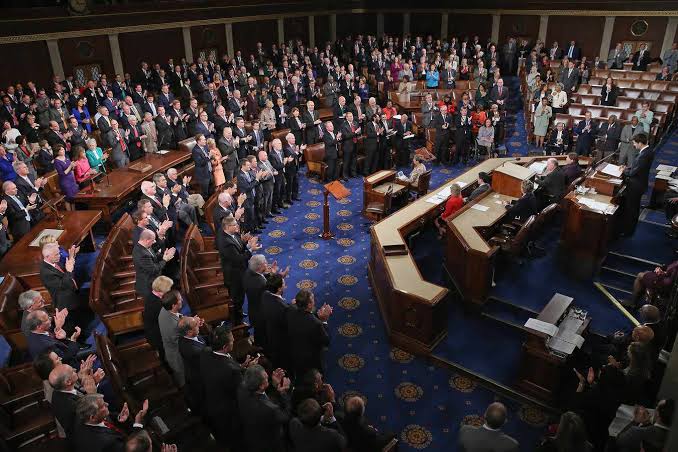
The United States House of Representatives has approved an amendment seeking to suspend all U.S. assistance to Nigeria until the Federal Government demonstrates stronger action in addressing violence against Christian communities and improving religious freedom protections.
The measure, adopted during consideration of the U.S. fiscal year appropriations bill on Wednesday in Washington, D.C., was sponsored by Republican Congressman Greg Steube of Florida. It raises the proposed aid restriction from 50 per cent to 100 per cent, reflecting growing concern among some American lawmakers over attacks linked to religious violence in Nigeria.
Speaking after the vote, Steube said the amendment was intended to encourage Nigerian authorities to take more decisive measures against those responsible for attacks on Christian communities. He announced the passage of the proposal through a post on his X account shortly after proceedings in the House of Representatives.
“My amendment to withhold 100% of U.S. aid to Nigeria until its government stops the slaughter of Christians has passed.”
Supporters of the amendment argued that continued U.S. assistance should be tied to measurable improvements in protecting citizens from religiously motivated violence. They maintained that the Nigerian government must demonstrate greater commitment to preventing attacks, prosecuting offenders and safeguarding freedom of religion before full financial support is restored.
The amendment forms part of broader congressional efforts that have intensified in recent months following reports and hearings on insecurity affecting Christian communities in parts of Nigeria.
The latest vote follows earlier recommendations from the House Foreign Affairs Committee and the House Appropriations Committee, which jointly submitted a report to the White House urging tougher U.S. engagement with Nigeria over religious persecution.
The report called for stronger diplomatic pressure and stricter conditions on American assistance while encouraging Nigeria to improve accountability and security for vulnerable communities.
The proposal still forms part of the wider U.S. budget process and will require approval through the remaining legislative stages before it can become law.
Nigerian authorities have consistently rejected claims that Christians are being systematically targeted, insisting that the country’s security challenges affect people of different faiths and ethnic backgrounds. The government has maintained that it is confronting terrorism, banditry and communal violence across the country without discrimination.



















