

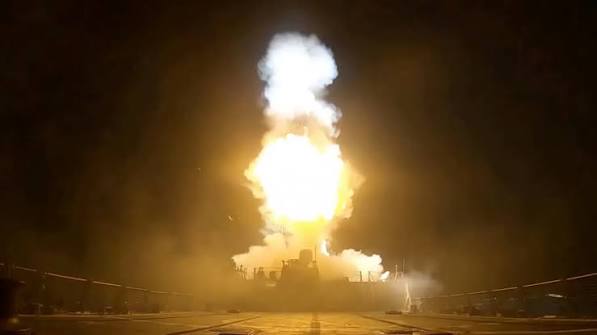
The United States launched another round of airstrikes against Iranian military facilities on Monday, November 2, raising fresh questions about President Donald Trump’s earlier promise to avoid military action against Tehran before America’s midterm elections.
The operation came a day before voters went to the polls, with American officials maintaining that the attacks were necessary to protect US forces operating near the Strait of Hormuz.
Military officials identified Qeshm Island, off Iran’s southern coast, as one of the locations targeted during the strikes.
According to the US account, Iranian surface-to-air missile systems posed a threat to American aircraft in the area, prompting the decision to attack. Missile launchers were reportedly among the facilities hit.
Reports from Iran also indicated that explosions had occurred near Hengam Island and Bandar Abbas, a major port city along the country’s southern coastline.
The strikes followed a confrontation involving an American aircraft and members of Iran’s Islamic Revolutionary Guard Corps.
Iranian authorities claimed their forces had shot down a US drone during the encounter, but Washington rejected that account.
Although the operation took place on Monday, American authorities did not immediately issue a public statement announcing the attacks.
Officials later acknowledged that US forces had conducted other strikes in recent weeks without publicly disclosing them. They described those operations as efforts to protect military personnel and commercial shipping.
The timing has attracted attention because Trump had previously ruled out attacking Iran before the November 3 congressional elections.
Speaking on October 8, the president said diplomatic engagement with Tehran was progressing and indicated that military action would not take place before Americans voted.
On Tuesday, however, Trump sought to minimise the significance of the latest strikes, presenting them as a limited military response rather than the beginning of another major offensive.
He explained that American forces had attacked an Iranian anti-aircraft installation after observing its development.
Tehran condemned the operation, accusing the United States of continuing its military campaign despite ongoing diplomatic contacts.
Iran’s Deputy Foreign Minister, Kazem Gharibabadi, maintained that his country had the right to respond to further attacks.
Despite the renewed hostilities, efforts to negotiate an agreement between Washington and Tehran have continued.
Qatar has remained involved in diplomatic discussions aimed at preventing the confrontation from developing into a wider conflict.
The negotiations have addressed security around the Strait of Hormuz, restrictions affecting Iranian oil exports and demands concerning military operations.
Trump has also suggested that an agreement remains achievable, although he has warned that additional attacks could follow if diplomatic efforts fail.
The continuing confrontation has affected shipping activities and energy supplies, increasing international concern about developments around the Gulf.
With military operations continuing alongside negotiations, attention remains on whether both governments can reach an agreement before tensions escalate further.



















