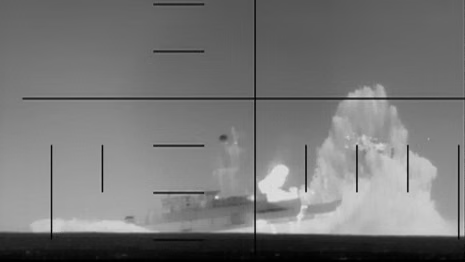
A U.S. submarine sank an Iranian warship in the Indian Ocean, Defense Secretary Pete Hegseth said Wednesday, as the expanding conflict between Washington, Israel and Tehran spread further across the Middle East and drew new political pushback in Congress. Associated Press reported that the warship was hit by a U.S. torpedo Tuesday night, while Sri Lankan authorities said 87 bodies had been recovered and 32 crew members rescued after the vessel went down off the island’s coast.
The strike came as Israel widened its campaign beyond Iran, hitting Hezbollah and Palestinian militant targets in Lebanon, while Iran launched missiles and drones at Israel and at U.S.-linked targets in Bahrain and Kuwait, according to AP and Reuters. Reuters also reported that six U.S. service personnel had been killed in earlier Iranian retaliatory strikes on Kuwait over the weekend, underlining how quickly the conflict has moved beyond Iran’s borders.
In Washington, the Senate on Wednesday rejected a war powers resolution that would have required congressional approval before further U.S. military action against Iran. AP reported that the measure failed by a 47–53 vote, making clear that the immediate challenge to President Donald Trump’s authority to continue the war had fallen short in the Republican-controlled chamber. A similar effort in the House also faces steep odds, and any successful measure would likely meet a presidential veto.
The human toll has continued to rise. AP reported that the fighting has killed more than 1,000 people in Iran, more than 50 in Lebanon and around a dozen in Israel, according to officials in those countries. The United Nations refugee agency, citing Iranian estimates, said about 100,000 people fled Tehran in the first two days of the war alone, a sign of the scale of civilian panic following the opening U.S.-Israeli strikes.
The economic fallout has also deepened. AP said oil prices surged after Iranian attacks disrupted shipping through the Strait of Hormuz, while global stock markets came under pressure from fears that a prolonged energy shock could weaken the world economy. U.S. markets appeared steadier at Wednesday’s open, but investor concerns remained high. Regional leaders warned that the conflict was becoming dangerously destabilizing. Arab League Secretary-General Ahmed Aboul Gheit said the attacks had created an “unprecedented state of hostility” with Iran’s Gulf neighbors and called Tehran’s actions a “strategic mistake,” adding that “Iran must come to its senses.”