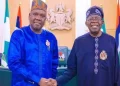

Benin’s opposition candidate, Paul Hounkpe, has conceded defeat to Finance Minister Romuald Wadagni, clearing the way for the ruling coalition’s candidate to succeed outgoing President Patrice Talon.
Hounkpe offered what he called “republican congratulations” to Wadagni after Sunday’s presidential election, even before final official results were released. Provisional results later showed Wadagni winning by a landslide, with more than 94 percent of votes counted, according to Benin’s electoral commission.
“To Romuald Wadagni, I offer my republican congratulations. Democracy requires mutual respect and the ability to rise above partisan divides,” Hounkpe said in his concession statement.
Wadagni, 49, had been widely expected to win after receiving the backing of Talon, who is stepping down after serving two five-year terms since 2016. A former Deloitte executive and long-serving finance minister, Wadagni campaigned as a continuity candidate, promising to preserve Benin’s economic reforms while expanding access to water, healthcare and social protection.
Despite the expected victory, the election exposed weak public enthusiasm. Turnout appeared low in some urban areas, including Porto-Novo and Cotonou, where daily activity resumed quickly after voting. The electoral commission later put turnout at 58.78 percent.
The contest was also marked by criticism over limited political competition. Hounkpe needed support from lawmakers in the ruling-dominated parliament to secure the endorsements required to run, while the main opposition Democrats party failed to field a candidate after its nominee, Renaud Agbodjo, could not obtain enough endorsements.
Regional observers said the vote was largely peaceful. The ECOWAS Election Observation Mission commended the orderly conduct of the exercise, while Benin’s electoral commission said voting passed without major disruption. Civil society monitors, however, reported about 100 incident alerts, including polling stations opening early and concerns over ballot boxes.
Wadagni inherits an economy praised for strong growth and infrastructure expansion under Talon, but also faces deep social and security challenges. Poverty remains widespread, and many citizens say they have not felt the benefits of growth. In the north, jihadist violence linked to Sahel-based groups has intensified, posing one of the toughest tests for the incoming administration