

TEHRAN, IRAN
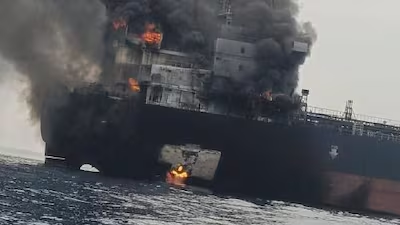
Two oil supertankers carrying more than 4.5 million barrels of crude have reportedly struck naval mines in the Strait of Hormuz, triggering explosions and fires that forced their crews to abandon the vessels, according to Iran’s Islamic Revolutionary Guard Corps (IRGC). The incidents reportedly occurred on Friday, October 23, along a route in the southern section of the strategically important waterway that Iranian authorities described as unauthorized. In a statement carried by the IRGC’s official Sepah News outlet, the force’s navy said the explosions ignited fires in the vessels’ engine rooms, leaving both tankers disabled. Iranian authorities claimed that the ships had attempted to navigate the waterway without following approved transit arrangements.
However, the IRGC did not identify the vessels, their nationalities or the companies operating them. The condition and whereabouts of the crew members remained unclear, and no independently verified casualty figures were immediately available. The reported explosions followed another maritime security incident near Oman.
The United Kingdom Maritime Trade Operations agency said a tanker travelling out of the Strait of Hormuz was struck by an unidentified projectile on Thursday evening, approximately seven nautical miles northeast of Limah, Oman. Unlike the two vessels described by Iran, that tanker reportedly continued its journey after the incident. The latest developments come amid mounting tensions over control of the Strait of Hormuz following the outbreak of war involving Iran, the United States and Israel in February. Tehran has repeatedly warned commercial vessels against using routes it considers unauthorized.
Earlier, Iranian state media claimed that seven tankers had been damaged or set ablaze during separate incidents involving attacks and naval mines. Those claims have not all been independently verified. The escalating maritime confrontation threatens one of the world’s most important energy transportation corridors. The Strait of Hormuz connects the Persian Gulf with the Gulf of Oman and normally handles a substantial share of internationally traded oil. Continued attacks could increase shipping insurance costs, disrupt energy deliveries and intensify pressure on global fuel prices.
The International Maritime Organization has documented numerous confirmed attacks on commercial vessels across the wider Middle East since the conflict began, highlighting growing risks to civilian seafarers. Meanwhile, the reported damage to tankers carrying millions of barrels of crude has raised concerns about potential oil spills and environmental harm.
As international maritime authorities investigate the latest incidents, uncertainty remains over the vessels’ identities, the extent of their damage and whether all crew members reached safety. The renewed violence underscores the escalating risks to international shipping and the urgent need to protect commercial navigation through the waterway.



















