

ATHENS, Greece
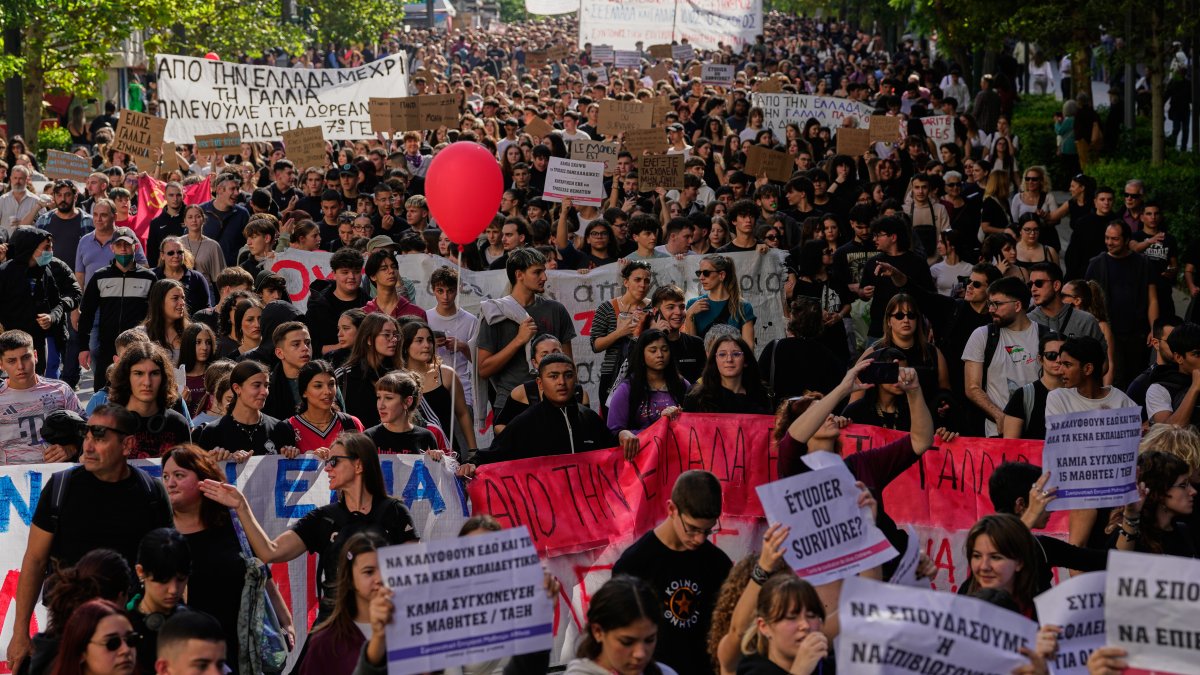
Thousands of students, schoolchildren and teachers marched through central Athens on Thursday, demanding increased government funding for public education, improved learning facilities and urgent action to address Greece’s rising cost of living.
The demonstrations, which also took place in Thessaloniki and other Greek cities, reflect growing frustration over deteriorating school infrastructure, teacher shortages and the increasing financial pressure facing students and families.
Protesters gathered outside the University of Athens at approximately 11 a.m. before marching towards Syntagma Square, where they assembled outside the Greek Parliament under police supervision.
According to police estimates, approximately 4,000 demonstrators participated in Athens and Thessaloniki combined. Protest organisers disputed the figure.
Carrying banners demanding free public education, demonstrators called for immediate repairs to ageing school buildings, permanent recruitment of teachers and smaller classroom sizes.
Some protesters deposited sacks of rubble outside Parliament to highlight unsafe learning environments, including leaking roofs, damaged ceilings and broken heating systems.
The Federation of Secondary Education State School Teachers (OLME) supported the demonstrations, organising a four-hour work stoppage between 10 a.m. and 2 p.m. to allow teachers to participate.
The union warned that inadequate funding, staff shortages and deteriorating facilities were undermining educational standards.
Students also expressed opposition to proposed nationwide-style examinations in secondary schools and changes to Article 16 of Greece’s Constitution, which protects the country’s public higher education framework.
Housing affordability emerged as another major concern.
Some university students reported paying rents approaching €800 monthly, making it increasingly difficult to cover accommodation, food, transportation and other educational expenses.
Student organisations demanded stronger financial assistance, affordable accommodation and measures to reduce living costs.
The demonstrations form part of a broader movement inspired by education protests in France and other European countries.
Earlier, on October 21, thousands of students and teachers participated in demonstrations across approximately 50 Greek cities, demanding similar reforms.
Thursday’s protests remained largely peaceful, although authorities introduced traffic restrictions and temporarily closed the Panepistimio metro station in central Athens.
The latest mobilisation follows a separate incident on Wednesday in which three people were injured during violence at a university gathering. Police are investigating that attack, and no confirmed connection to Thursday’s march has been established.
Student organisations have announced plans to participate in further demonstrations on November 17, coinciding with commemorations of the 1973 Athens Polytechnic uprising.
The continuing protests have intensified calls for Greece’s government to prioritise public education, improve student welfare and address the financial pressures facing young people.



















