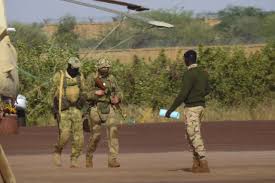
Russia’s foreign intelligence agency, the SVR, has assumed control of influence operations previously run by the Wagner Group across Africa following the death of its founder, Yevgeny Prigozhin, according to a new international investigation.
Wagner, long criticised by rights groups for its tactics, maintained a strong footprint across the continent, deploying fighters alongside national armies in countries such as Libya and Mali while also running extensive disinformation and destabilisation campaigns.
After Prigozhin died in a 2023 plane crash following a failed mutiny against Moscow, Russia’s defence ministry sought to reorganise Wagner-linked security operations through a structure known as the Africa Corps. However, investigators say the SVR has taken charge of the network’s influence activities — promoting Moscow’s political and economic interests, spreading disinformation and sidelining rivals.
“The SVR has now taken over the most effective tool of the Wagner Group,” the investigation said. The inquiry was conducted by a consortium including Forbidden Stories, among other investigative outlets.
Researchers say nearly 100 consultants worked within Wagner’s influence arm, known as Africa Politology or “The Company,” deploying teams between 2024 and 2025 across multiple regions in Africa and beyond. The SVR is said to provide intelligence, recruit sources and position key operatives in strategic roles.
The probe began after internal documents were anonymously sent to editors at The Continent. More than 1,400 pages of Russian-language files — including strategic plans, financial records and reports on disinformation campaigns — were reviewed, with investigators confirming the authenticity of 76 documents.
“The documents show that these operations combine political influence, disinformation and close ties to security services, going far beyond the usual practices in the sector,” the consortium said.
The report also highlights coordination — and at times rivalry — between the SVR and Russia’s defence establishment, including the GRU. While the defence ministry took over certain Wagner operations, such as in Mali, it did not fully absorb private military contractors in the Central African Republic.
Investigators say the SVR is deeply embedded in regional strategy, including gathering intelligence on Western activity in the Sahel and supporting diplomatic initiatives linked to shifting alliances. Military-led governments in Mali, Burkina Faso and Niger — which have distanced themselves from France and withdrawn from ECOWAS — formed the Alliance of Sahel States in 2023, a move the investigation describes as aligned with Russia’s broader strategy.
Co-author Lou Osborn said Russia has gained political ground in “unstable, vulnerable” Sahel states and operates an extensive lobbying network, including legal teams working to influence legislation.
Financial records suggest influence operations cost roughly $7.3 million between January and October 2024. Despite the investment, investigators say results remain limited.
“Russia is playing the long game but the results are not always quick to materialise,” they said, noting that many cooperation agreements have yet to translate into profitable ventures.