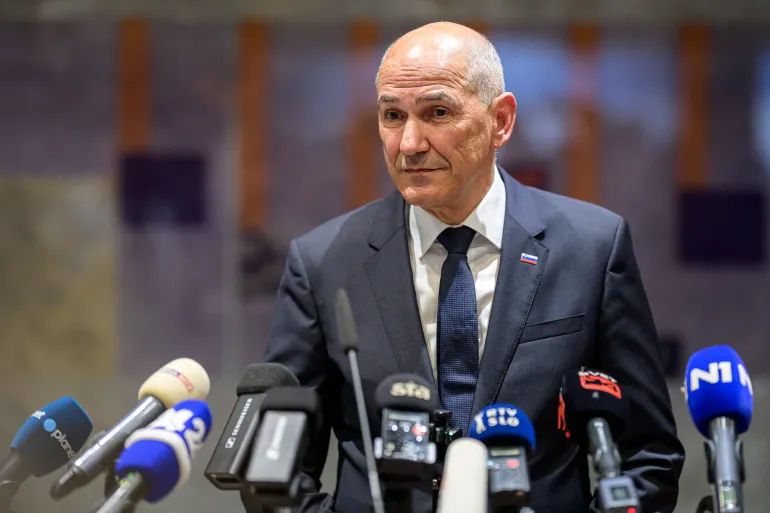
LJUBLJANA, Slovenia — Slovenia’s parliament has approved veteran right-wing politician Janez Janša as prime minister, returning him to power for a fourth term and marking a sharp political shift in the European Union member state after two months of post-election deadlock.
Lawmakers in the 90-seat National Assembly voted 51 to 36 on Friday in favour of Janša, leader of the Slovenian Democratic Party, clearing the way for him to form a new government. His approval ends weeks of uncertainty following the March parliamentary election, in which no party won an outright majority.
Janša’s SDS finished second in the election with 28 seats, narrowly behind the liberal Freedom Movement of outgoing Prime Minister Robert Golob, which won 29. However, Golob failed to assemble a governing majority, allowing Janša to build a right-leaning coalition with New Slovenia, the Democrats, the Slovenian People’s Party and Focus. His bid also received support from the anti-establishment Resnica party and deputies representing national minorities.
The result brings Janša back to the premiership after his previous government was defeated in 2022. A dominant figure in Slovenian politics for decades, he has led three previous administrations and remains one of the country’s most polarising leaders.
Janša said his new government would focus on economic reforms, tax relief, cutting bureaucracy, supporting businesses and start-ups, fighting corruption and decentralising power to local communities. His coalition has also promised measures to strengthen the pension system and improve Slovenia’s competitiveness.
The change represents a setback for Golob’s liberal administration, which came to power in 2022 on pledges to restore institutional trust after Janša’s earlier term. Golob’s Freedom Movement will now move into opposition after failing to convert its narrow election lead into a majority government.
Opposition figures have warned that Janša’s return could put pressure on democratic institutions and media freedom. During his last term, critics accused him of adopting tactics similar to Hungary’s Viktor Orbán, including attacks on journalists and public institutions. Janša and his supporters have rejected those accusations, saying they are politically motivated.
His comeback also has wider European significance. Janša is known for his conservative, nationalist positions, admiration for Donald Trump and close relations with right-wing forces in Central Europe. He has also strongly criticised Slovenia’s 2024 recognition of Palestinian statehood.
For Slovenia, the new government ends one political crisis but opens another test: whether Janša can hold together a broad right-wing coalition in a sharply divided parliament.