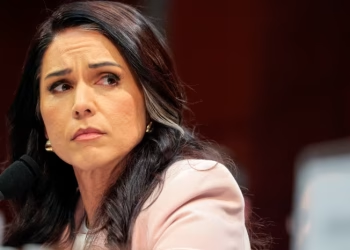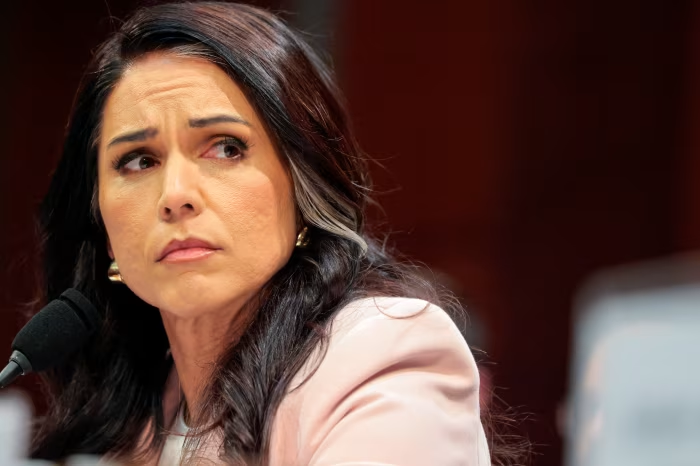
WASHINGTON — Tulsi Gabbard has resigned as U.S. Director of National Intelligence, citing her husband’s recent diagnosis with a rare form of bone cancer, ending a turbulent 15-month tenure marked by internal tensions over foreign policy and intelligence disputes.
Gabbard said in a resignation letter posted online that she had informed President Donald Trump she would step down effective June 30. She said her husband, Abraham Williams, faced “major challenges in the coming weeks and months” and that she needed to leave public service to support him during treatment.
President Trump praised Gabbard’s service, saying she had done “an incredible job,” and announced that Principal Deputy Director of National Intelligence Aaron Lukas would serve as acting director after her departure.
Gabbard, a former Democratic congresswoman from Hawaii and Iraq War veteran who later became a Republican and Trump ally, was confirmed as intelligence chief in early 2025. Her appointment was controversial from the start, with critics questioning her limited intelligence background and past foreign policy positions.
Her departure comes after months of reported strain inside the administration, particularly over the war with Iran and the intelligence community’s assessments of Tehran’s nuclear programme. Reuters reported that a source said Gabbard had been forced out because of tensions with the White House, including dissatisfaction over what was viewed as her softer position on Iran.
The Associated Press reported that her resignation came weeks after she repeatedly avoided questions at a congressional hearing about whether the White House had been warned of potential consequences from the Iran conflict.
Gabbard’s tenure also drew scrutiny over broader changes at the Office of the Director of National Intelligence, which coordinates 18 U.S. intelligence agencies. She pushed to reduce the size of the office, declassify historical records and challenge what she described as politicisation within the national security establishment. Supporters saw her as a reformer; critics accused her of weakening trust in intelligence institutions.
Her resignation makes her the latest senior woman to leave Trump’s Cabinet during his second term, following other high-profile departures from the administration.
The change could shift power within Trump’s national security team, with some analysts expecting CIA Director John Ratcliffe to gain greater influence over intelligence policy.
For now, the White House is presenting the resignation as a personal decision. But Gabbard’s exit also exposes the pressure facing Trump’s national security team as the administration manages the Iran conflict, growing congressional scrutiny and deep divisions over America’s role abroad.