

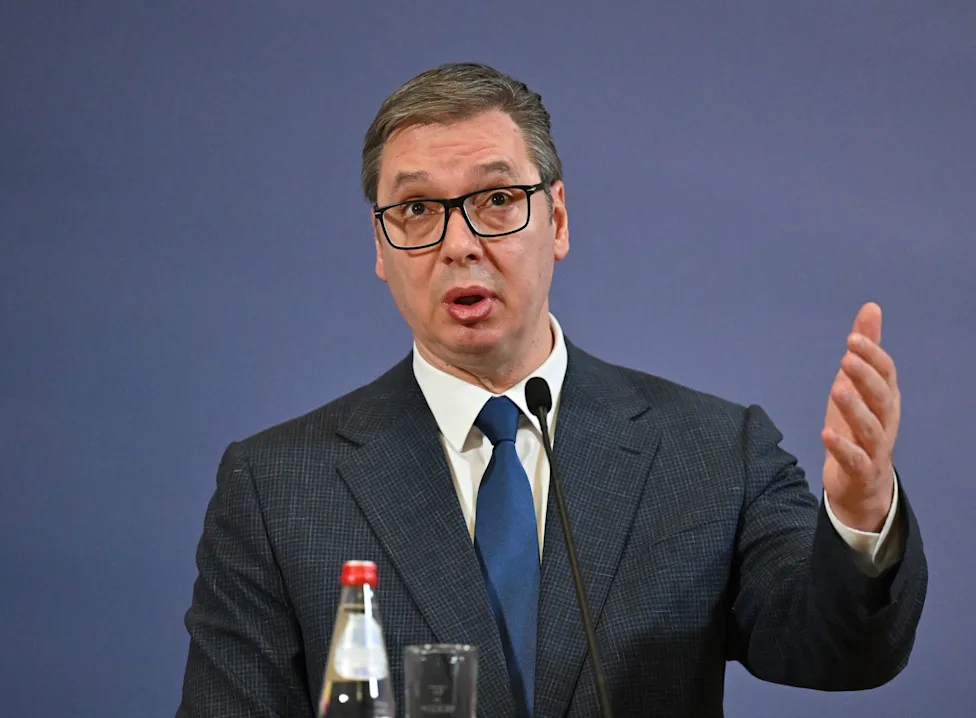
BELGRADE, Serbia
Serbian President Aleksandar Vučić has resigned from office after nearly two years of nationwide anti-government protests, paving the way for early presidential elections as he prepares to contest October’s parliamentary vote.
The 56-year-old announced his resignation on Sunday at the presidential palace in Belgrade, ending his second and final five-year term seven months ahead of schedule. Hundreds of supporters gathered outside the presidency, waving Serbian flags and cheering as Vučić delivered his farewell address.
“I am resigning as president,” he declared, confirming that he would transfer his duties to parliamentary Speaker Ana Brnabić on Monday.
Under Serbia’s constitution, Brnabić will serve as acting president pending a fresh election, which must be completed within 90 days. Vučić said the first round of presidential voting would take place before the end of December.
His departure follows sustained student-led demonstrations sparked by the November 2024 collapse of a railway station canopy in Novi Sad, which killed 16 people. The tragedy triggered widespread anger over alleged corruption, public procurement practices and government accountability.
Protesters accused the authorities of failing to ensure transparency and demanded investigations, institutional reforms and early elections. The government has repeatedly rejected accusations of wrongdoing and defended its handling of the unrest.
Vučić, who has dominated Serbian politics since 2014, is constitutionally barred from seeking a third presidential term. He will instead lead the Serbian Progressive Party (SNS) into the October 25 parliamentary elections, seeking the position of prime minister. The contest will also feature the student-backed Students Win movement and European Serbia, an alliance of pro-Western opposition parties.
Shortly before stepping down, Vučić announced pardons for 49 people, including activists and government supporters connected with the prolonged protests. He said 23 of those pardoned were linked to incidents arising from the demonstrations.
Rights organisations have accused Serbian authorities of excessive force and politically motivated detentions during the unrest, allegations the government denies. The political developments are also being closely watched across the Western Balkans, where Serbia maintains significant diplomatic and economic influence.
With presidential and parliamentary elections approaching, the country enters a new phase of political transition shaped by competing demands for accountability, institutional reform and continuity in government.
I can monitor Serbia’s October 25 elections and provide updates on major developments. Want me to set that up?



















