

OUAGADOUGOU, Burkina Faso
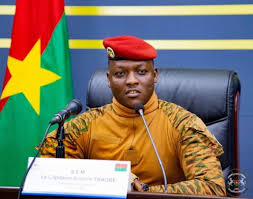
Nearly four decades after the assassination of revolutionary leader Thomas Sankara, Burkina Faso’s military ruler Captain Ibrahim Traoré is increasingly invoking his legacy as he pursues an economic and political programme centred on sovereignty, local production and rejection of foreign dependence.
Sankara seized power in 1983 and launched what he called a “Democratic and Popular Revolution”, promoting mass education, women’s empowerment, vaccination campaigns and greater national self-reliance before he was assassinated in an October 1987 coup. Traoré, who took power in September 2022, has repeatedly portrayed Sankara’s ideas as unfinished work.
The similarities are most visible in economic policy. Traoré’s government has expanded state involvement in mining and in July approved a 100-percent state-owned industrial gold mine at Bouboulou. On Monday, he inaugurated Burkina Faso’s first national gold refinery, saying more value from the country’s mineral wealth should remain at home.
His administration has also expanded Faso Mêbo, a presidential infrastructure initiative adopted in 2024 to build roads and redevelop cities while mobilising domestic equipment, materials and citizen participation. Hundreds of construction vehicles have since been deployed to regional brigades.
But Traoré is governing under circumstances sharply different from those confronting Sankara.
Burkina Faso remains locked in a prolonged insurgency involving armed groups affiliated with al-Qaeda and Islamic State. Some communities remain under blockade, while government claims of recovering significant territory have been difficult to independently assess.
His domestic record has also attracted serious criticism. Human Rights Watch and other rights organizations have accused the military authorities of restricting political activity and using emergency mobilization laws to forcibly recruit journalists, civil society activists, opposition figures and members of the judiciary. The government has defended mobilization as necessary in the fight against armed groups.
Internationally, Traoré has accelerated Burkina Faso’s break with France. Ouagadougou severed diplomatic relations with Paris in June and has strengthened military and economic cooperation with Russia.
Burkina Faso has also joined Mali and Niger in the Confederation of Sahel States, with Traoré currently serving as its rotating president.
The comparison with Sankara therefore remains contested: supporters see continuity in sovereignty and economic nationalism, while critics point to political repression and unresolved insecurity. What is clear is that Traoré has deliberately placed Sankara’s revolutionary legacy at the centre of Burkina Faso’s latest political transformation.



















