

SAMARKAND, UZBEKISTAN
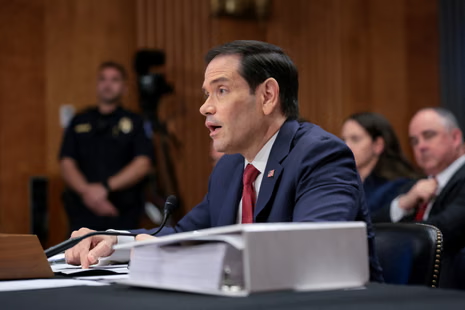
United States Secretary of State Marco Rubio is visiting Uzbekistan for high-level diplomatic talks aimed at strengthening Washington’s influence in Central Asia, as the resource-rich region seeks broader international partnerships while maintaining longstanding ties with Russia and China. Rubio is expected to participate in the C5+1 ministerial summit in Samarkand, bringing together the United States and five Central Asian nations: Uzbekistan, Kazakhstan, Kyrgyzstan, Tajikistan and Turkmenistan.
The October 17–20 gathering represents a renewed American effort to deepen economic cooperation, expand trade opportunities and secure access to critical minerals increasingly important to global technology and manufacturing industries. More than 200 American business representatives are accompanying the diplomatic initiative, underscoring Washington’s growing commercial interest in the region.
The visit comes as Central Asian governments seek to diversify economic relationships rather than depend heavily on Moscow and Beijing, which have historically maintained considerable political and commercial influence. Russia retains significant leverage through energy networks, labour migration, security relationships and cultural connections. China has expanded its presence through infrastructure financing, transportation corridors and major investment projects.
However, Russia’s prolonged war in Ukraine and growing geopolitical tensions have encouraged regional governments to explore additional partnerships with Western countries.
Uzbekistan, under President Shavkat Mirziyoyev, has emerged as an important destination for foreign investment and diplomatic engagement.
Washington’s renewed approach increasingly prioritises commercial agreements, strategic resources and practical cooperation. Regional analyst Galiya Ibragimova told Al Jazeera that Washington’s current policy places greater emphasis on business interests than the democracy and human rights conditions associated with earlier Western engagement.
However, rights advocates have raised concerns that the reduced emphasis on political freedoms could weaken international scrutiny of restrictions on journalists, opposition figures and civil society. The diplomatic outreach also reflects growing international competition for rare-earth minerals and other resources essential to electronics, renewable energy technologies and advanced manufacturing.
Experts caution that major investment commitments will depend on reliable infrastructure, transparent regulations and stronger protections for foreign investors. The summit’s significance extends beyond economics. Central Asia occupies a strategic position connecting China, Russia, the Middle East and Europe, making the region increasingly important to international trade and security.
For Washington, the meetings offer an opportunity to strengthen relationships in a region where American influence has historically been limited. For Central Asian governments, the objective is broader: attracting investment, expanding diplomatic options and preserving independence in an increasingly competitive geopolitical environment. The outcome will depend on whether diplomatic promises translate into sustainable economic partnerships and concrete agreements.



















