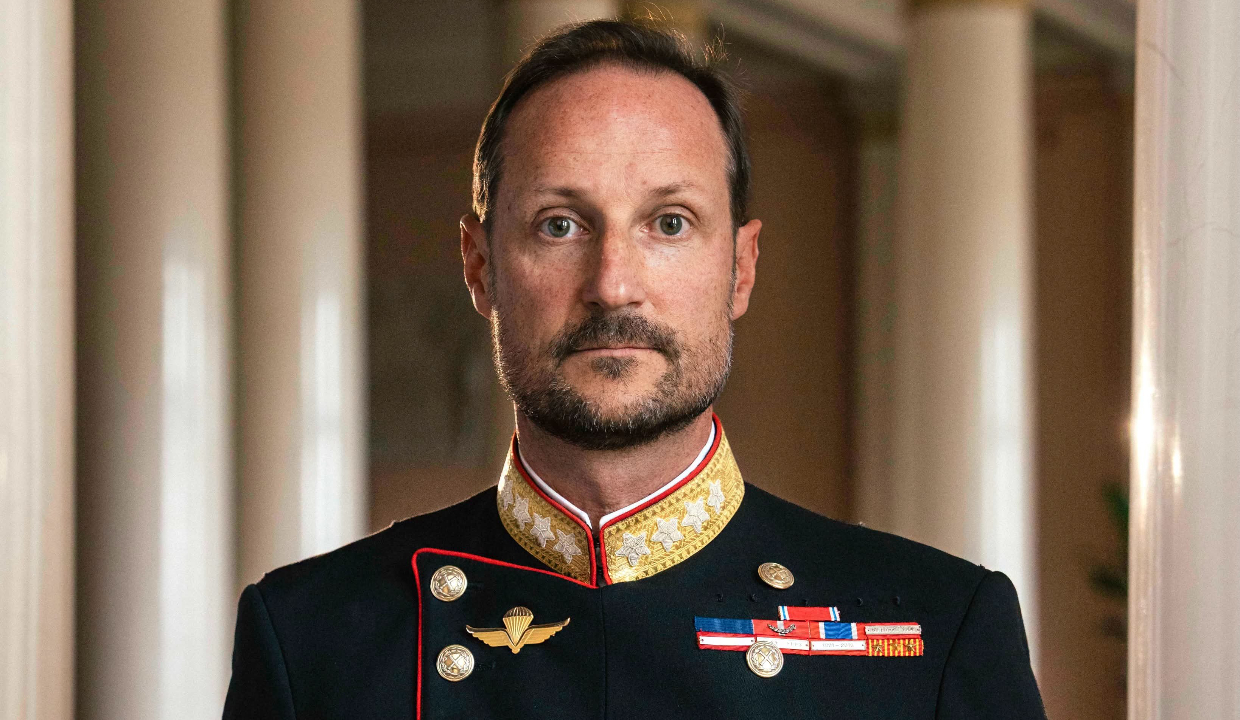
Norway has entered a new royal era with Crown Prince Haakon succeeding his father, Harald V, as king, even as thousands gathered outside the Royal Palace in Oslo to mourn the monarch who ruled the country for more than three decades. Haakon, 53, assumed the throne on Friday, August 28, and will reign as King Haakon VIII.
King Harald died at Oslo University Hospital at 6:35 a.m. on Friday, according to the Norwegian Royal House. He was 89. His death brought an immediate transition of power under Norway’s constitutional system, with his son succeeding him without a separate coronation.
At an extraordinary Council of State at the Royal Palace in Oslo, the new monarch formally informed the government of his father’s death and announced the name he would use as king.
“I will take the name Haakon VIII and will continue the same royal motto chosen by my father, grandfather and great-grandfather: ‘Alt for Norge.’”
The change of monarch was accompanied by scenes of public mourning. Crowds gathered outside the palace, with people laying flowers and paying their respects to Harald, whose reign began in 1991.
Harald had been hospitalised in Oslo since August 17 with haemolytic anaemia, a condition involving the rapid destruction of red blood cells. His health had been a concern for several years, and he had reduced his official duties as he grew older.
Norwegian Prime Minister Jonas Gahr Støre described the death as a moment of national mourning, while highlighting Harald’s long public service and his close relationship with the Norwegian people.
Harald’s reign lasted about 35 years, during which the monarchy became closely associated with Norway’s modern national identity. His death now leaves his son to take on a role that is largely ceremonial but remains important in representing the country at home and abroad.
Haakon is not new to the responsibilities of the crown. He had served as regent on several occasions when his father’s health prevented him from carrying out official duties. He also became heir apparent in 1991 after Harald succeeded his own father, King Olav V.
His wife, Mette-Marit, becomes queen, while their daughter, Princess Ingrid Alexandra, moves into the position of Crown Princess and heir to the throne. Norway’s succession rules give the throne to the firstborn regardless of gender, following a constitutional change adopted in 1990.
The new king inherits a monarchy that has traditionally presented itself as relatively modest and closely connected to ordinary Norwegian life. But he also takes over at a time when the institution faces questions about public confidence and several controversies involving members of the royal family.
For now, however, the transition is being overshadowed by the loss of Harald. Norway is observing a period of mourning for the late king, while the new monarch begins his reign under the name Haakon VIII.
The succession marks both an ending and a beginning: a country remembers a king who occupied the throne since 1991 while turning to his son to lead the Norwegian monarchy into its next chapter.