

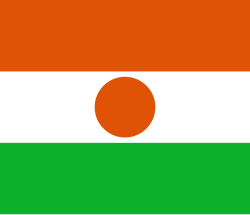
Niger’s security forces have launched a large-scale operation to track down militants who attacked Diori Hamani International Airport in the capital, Niamey, killing 11 soldiers and two civilians, authorities said.
The assault took place early on Thursday and targeted both the airport and a neighbouring military base. The defence ministry said 22 attackers were killed, four people were wounded and about 20 suspects were arrested after hours of gunfire near the airport. The al-Qaeda-linked Group for the Support of Islam and Muslims, known by its Arabic acronym JNIM, later claimed responsibility, saying it had carried out a suicide attack.
“A large-scale operation by the defence and security forces to track down and neutralise the remaining elements is underway,” the military said in a statement, adding that the airport was “fully secure” and remained open to air traffic. However, flight-tracking data showed some services bound for Niamey were delayed or diverted after the attack.
Residents said gunfire began around 6am near the airport entrance, where there is a security checkpoint, and continued for several hours. An airport source said the attackers arrived at the checkpoint by taxi before meeting stiff resistance from security forces. Some of the assailants wore explosive belts, according to the defence ministry.
The attack was the second major assault this year on Diori Hamani International Airport, a sensitive site that also hosts military facilities. In January, an attack claimed by the Islamic State in the Sahel targeted the airport and an adjoining military drone base, leaving 20 assailants dead and four soldiers wounded, according to authorities.
The renewed assault highlights the growing ability of armed groups to strike urban and strategic targets in Niger, despite tighter security around the capital. The airport perimeter had reportedly been reinforced after the January attack, with expanded fencing and hundreds of surveillance cameras installed.
Niger has been ruled by a military junta since the 2023 coup that brought General Abdourahamane Tiani to power. His government has cut ties with former colonial power France and sought closer partnerships with Russia, Turkey and Iran. Authorities have repeatedly accused Paris of supporting efforts to destabilise Niger, allegations France denies.
Niger, Mali and Burkina Faso, all led by military governments, continue to face attacks from groups affiliated with al-Qaeda and the Islamic State across the wider Sahel.



















