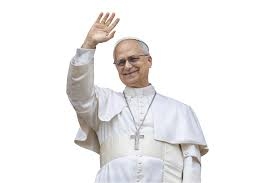
Only days after his election, Pope Leo XIV stood before a jubilant crowd in Vatican City on Sunday and issued a strong plea for world peace, calling on political leaders to halt the violence plaguing the globe. It was his second official appearance as head of the Catholic Church—and one that quickly set the tone for his papacy.
The former Cardinal Robert Francis Prevost of Chicago, now the first American to lead the Church, delivered his message from the iconic balcony of St. Peter’s Basilica, where thousands of worshippers had gathered in anticipation.
“Dear brothers and sisters, happy Sunday!” he called out to the sea of onlookers waving flags and banners, many overcome with emotion. The warm salutation was met with applause and cheers from people who had traveled from all corners of the world to witness the beginning of a new chapter for the Church.
Drawing on the recent commemoration of 80 years since the end of World War II, Pope Leo addressed the turmoil affecting today’s world. “In today’s dramatic scenario of a third world war in tatters, as repeatedly stated by Pope Francis, I also address the powerful of the world, repeating the ever-timely appeal: No more war!” he proclaimed.
He spoke solemnly about the need to end the violence in Ukraine and the ongoing bloodshed in the Gaza Strip, urging global powers to prioritize humanitarian concerns. “Humanitarian aid must be provided to the exhausted civilian population and all the hostages must be freed,” he said, expressing sorrow over the toll on innocent lives.
The square was teeming with life—pilgrims, clergy, and young people gathered in celebration and prayer. The energy was palpable as visitors sang hymns, strummed guitars, and held symbols of their faith aloft. Among them was Alejandrina Espinosa, a 59-year-old woman from Peru’s Quechua community. With tears in her eyes, she reflected on the new pope’s deep connection to her homeland. “He stole our hearts, because he awakened Christianity. The pope turned his work towards the forgotten, desolate peoples,” she said
Earlier that day, Pope Leo celebrated mass in the Vatican Grottoes near the tomb of St. Peter. The day before, he made a quiet visit to pray at the final resting place of Pope Francis in Santa Maria Maggiore, a church that held special meaning for the late pontiff. It was a clear gesture of respect for the man he now follows.
Leo’s election came after a brief conclave on Thursday. Cardinals looked to him as a figure who could guide the Church through internal fractures and modern challenges while revitalizing the faith of its 1.4 billion followers. Speaking to the cardinals, the 69-year-old pope described himself modestly. “I am a humble servant of God… and nothing more than this,” he said, adding that he saw himself as an “unworthy successor” to St. Peter.
Though his leadership style appears quieter than Pope Francis’s, Leo has shown early signs of continuing his predecessor’s focus on simplicity, service, and outreach to the marginalized. “With his example of complete dedication to service and to sober simplicity of life,” Leo said of Francis, he hopes to carry forward that vision.
Cardinal Pierbattista Pizzaballa, Latin Patriarch of Jerusalem, voiced optimism about the new pope’s path. “We are at the beginning of his pontificate, but already the first steps give us great courage and comfort,” he said in an interview with Corriere della Sera. “Even the reaction of the people, so beautiful and enthusiastic, says a lot.”
Looking forward, Pope Leo has a series of key events ahead. On Monday, he is set to meet with international journalists. He’ll receive diplomatic envoys later in the week and preside over his first papal mass on May 18. His inaugural general audience will be held on May 21, followed by consultations with Vatican officials on May 24.
In one of his first decisions, Leo confirmed that current Vatican department heads would remain in their roles for the time being, ensuring continuity after Pope Francis’s passing on April 21.
With a calm demeanor, a missionary’s heart, and a message rooted in compassion, Pope Leo XIV begins his papacy as a leader aiming to bring spiritual unity and hope to a deeply divided world.