

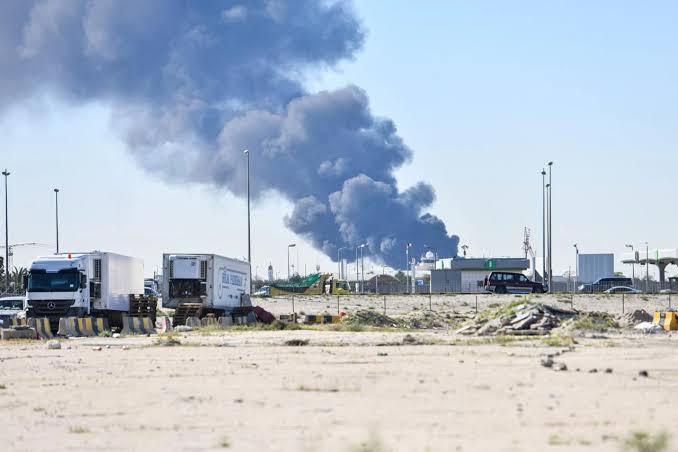
Kuwait has reported another attack on one of its electricity generation and water desalination plants, marking the second such incident in as many days amid rising tensions in the Gulf.
The Kuwaiti Ministry of Electricity, Water and Renewable Energy said the latest strike damaged part of the facility and disrupted some operations. Kuwaiti officials attributed the attack to Iran. Iran has publicly described its broader military operations as targeting strategic objectives in the region.
According to Kuwaiti authorities, emergency teams were immediately deployed after the incident to contain a fire that broke out at the site. Several power-generation units were shut down as a precaution, while contingency measures were activated to minimise the impact on electricity and water supplies.
Officials said restoration work was underway and that essential services continued through alternative arrangements.
In a statement issued in Kuwait City, the country’s Ministry of Foreign Affairs condemned the incident, describing the reported strike as an attack on civilian infrastructure and a violation of international law.
The ministry urged the international community to take steps to prevent further attacks on facilities that provide essential public services.
“Another electricity and water distillation plant was targeted by a hostile attack.”
The ministry added that Kuwait would continue taking measures to protect its critical infrastructure and ensure the safety of residents.
Iran has not specifically commented on Kuwait’s latest allegation. However, Iranian officials have previously said their military actions in the region are aimed at what they describe as strategic and military targets linked to the ongoing conflict with the United States and its allies. The differing accounts could not be independently verified.
The reported attack also affected transportation, with Kuwait Airways adjusting flight schedules after temporary restrictions were introduced in the country’s airspace because of security concerns. Regional governments have heightened surveillance around airports, energy facilities and other strategic installations as the conflict continues to generate uncertainty across the Gulf.
The latest development underscores growing concerns about the potential impact of the regional conflict on civilian infrastructure. Energy and water facilities are considered vital to daily life across the Gulf, and experts warn that repeated disruptions could have significant humanitarian and economic consequences if hostilities continue. Diplomatic efforts aimed at easing tensions remain ongoing, although no breakthrough has been announced.



















