

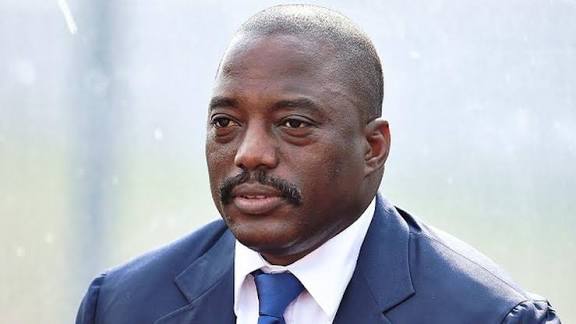
Former Democratic Republic of Congo president Joseph Kabila has urged Congolese citizens to confront what he describes as a deepening national crisis, accusing the government of mishandling the conflict in the east and failing to respond to his earlier proposals for political change.
Kabila made the remarks in a national address on Friday, October 9, 2026. He said the warnings and recommendations he presented in May 2025 had been ignored, while the country’s political, security and social problems had continued to worsen.
The former leader, who governed from 2001 until January 2019, criticised President Félix Tshisekedi’s administration without directly naming him in parts of the speech. Kabila argued that power had become increasingly concentrated in the presidency and questioned the state of democratic institutions.
He also raised concerns about corruption, restrictions on civil liberties and declining national cohesion. These were accusations made by Kabila in his address, as he called for changes in the way the country is governed.
The conflict in eastern Congo was another major focus. Kabila criticised the government’s military approach to fighting involving the Congolese armed forces and the M23 rebel movement, arguing that the war was continuing without a convincing path to victory.
He also questioned the progress of negotiations with parties involved in the conflict. In his view, the government needed to pursue a political solution alongside security measures rather than rely primarily on military operations.
Kabila renewed his call for an inclusive national dialogue, saying political and social divisions could not be resolved without meaningful engagement among the country’s different groups. He accused the authorities of failing to give such initiatives proper consideration.
His appeal builds on a 12-point proposal he presented on May 23, 2025. The plan included ending the war, restoring state authority and the rule of law, reconciling communities, addressing armed groups and withdrawing foreign troops.
The former president also questioned the government’s approach to international partnerships, including its relationship with the United States over strategic minerals. He warned that agreements involving the country’s natural resources should protect national interests and not undermine long-term sovereignty.
Kabila said he would present further ideas for addressing the crisis in the hours, days and weeks ahead. He urged the population to recognise the seriousness of the situation and take responsibility for the country’s future.
His intervention adds to the political tensions surrounding Tshisekedi’s government as fighting continues in the east and diplomatic efforts seek to end the conflict. Whether Kabila’s proposals will gain wider political support or lead to renewed negotiations remains uncertain.



















